.webp)
Why Skincare Brands Need Full-Funnel Amazon Ads (DSP + SP Combo)
Read more
.png)
Sponsored Brands Video puts an auto-playing clip atop Amazon search, so new fitness brands win clicks and new-to-brand orders before reviews exist. It is the fastest launch visibility lever.
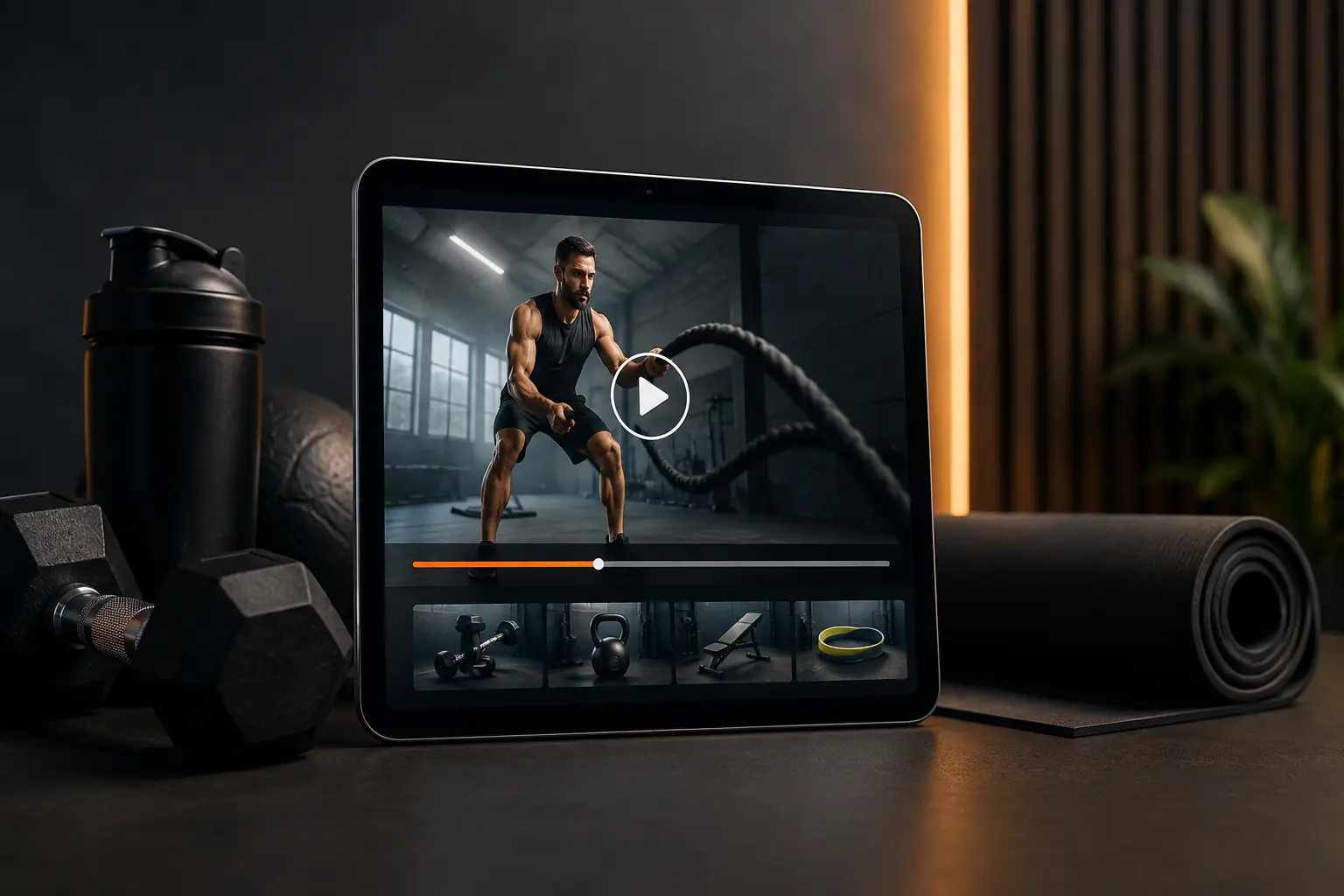
Picture the first morning a new pre-workout goes live on Amazon. The listing is clean, the images are sharp, and almost nobody can find it. No reviews. No Best Sellers Rank (BSR) worth showing. No history that tells Amazon who should see it.
For a fitness or supplement brand, that quiet launch window is the most expensive part of the whole project, because every silent day is inventory, package runs, and cash sitting still.
Sponsored Brands Video is the format that shortens that window.
It places an auto-playing product clip near the top of the search results, where a shopper scrolling "creatine gummies" or "resistance bands" sees your product in motion before the ten listings that have sat there for years.
That is the case for using Sponsored Brands Video for fitness brands during a launch: it buys attention you have not earned yet, in the one moment attention matters most.
This guide pairs closely with our broader framework for how fitness brands scale past $100K a month on Amazon PPC, which is where a strong launch eventually leads.
Sponsored Brands Video is a self-serve ad format inside Amazon Ads. It shows a short, auto-playing video in the search results on mobile and desktop, and a click sends the shopper straight to one product detail page you choose.
The video starts on mute once it is at least half visible, and it loops. It is available only to sellers enrolled in Amazon Brand Registry.
For an established brand, video is a nice lift. For a launch, it changes the math. A new listing has none of the trust markers Amazon's ranking leans on. It has no reviews to reassure a shopper and no sales velocity to earn an organic position.
A static Sponsored Products ad puts your thumbnail in a row of near-identical thumbnails, and the buyer has no reason to pick the unknown one.
Video breaks that pattern. It takes more vertical space, it moves, and it shows the product doing the thing a photo only implies: powder dissolving, a gummy pinched between two fingers, a band stretched through a real rep.
In a category built on demonstration, that motion is the difference between "another supplement" and "oh, that is what it looks like."
The format is quietly one of the best top-of-funnel tools a fitness brand has on the platform, and most new sellers skip it because they assume video is expensive or complicated. It is neither, and the brands that move first tend to take the placement cheaply.
That head start matters because Amazon's advertising business is now one of the largest and most competitive ad platforms in the United States, so the terms only get more contested as your category matures.
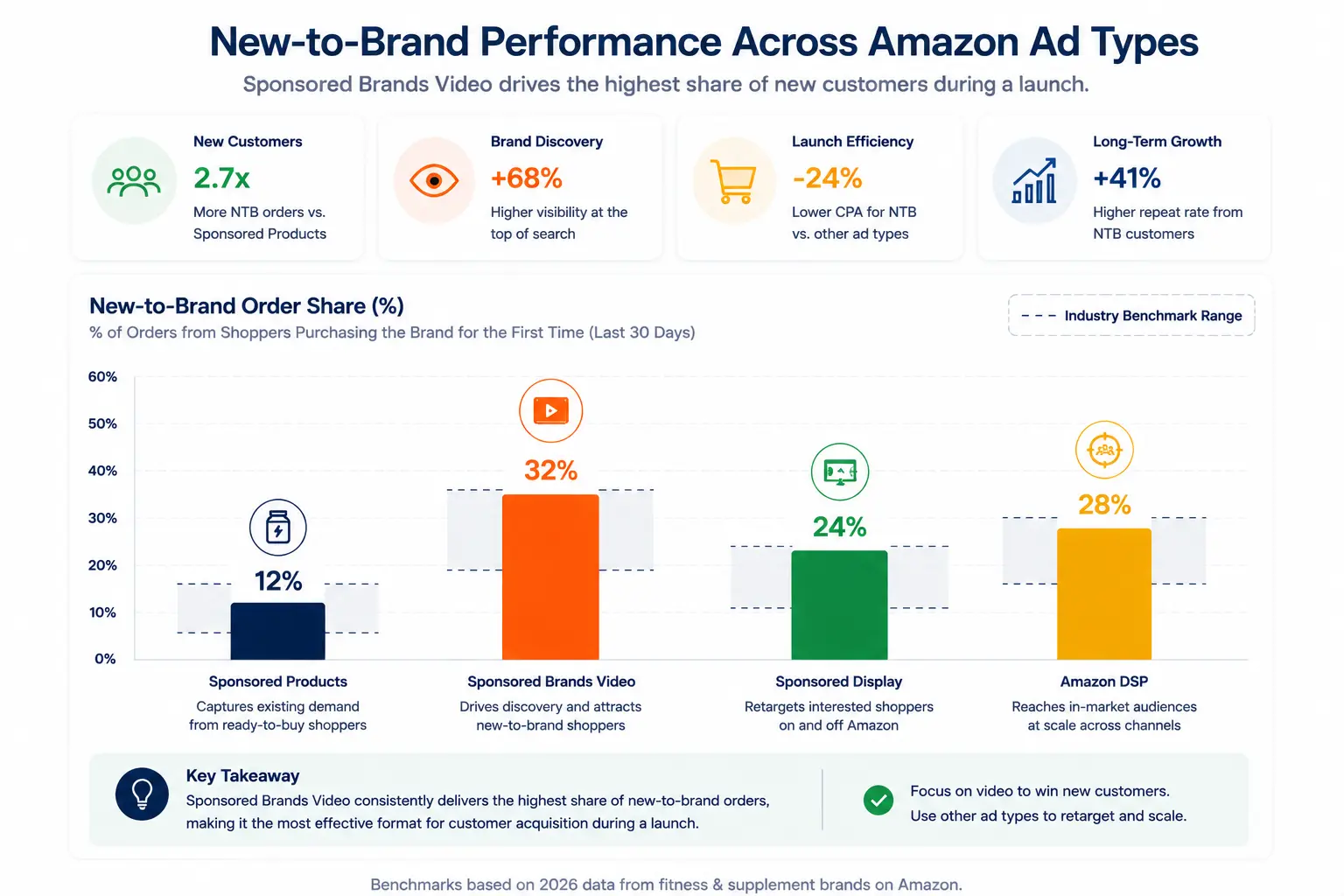
Here is the reason serious launch teams reach for this format, and it almost never appears in the ranking guides.
New-to-Brand (NTB) is an Amazon metric that tags every ad-attributed order as either a first-time buyer of your brand or a repeat one, based on whether that shopper bought from you on Amazon in the previous 365 days.
It reports on Sponsored Brands (including video), Sponsored Display, and Amazon Demand-Side Platform (DSP). It does not report on Sponsored Products.
Sit with that for a second. During a launch, the number you care about most is not raw sales.
It is how many of those sales came from people who had never bought from you before, because that is what a launch is supposed to do: build a customer base, not resell to the three people who already know you.
Sponsored Products can drive orders, but it cannot tell you whether you are acquiring anyone new. Sponsored Brands Video can.
Across managed fitness and supplement accounts, the practical read is consistent: video campaigns tend to carry a meaningfully higher share of new-to-brand orders than Sponsored Products does.
Independent 2026 benchmark roundups put Sponsored Brands new-to-brand rates well above Sponsored Products, which lines up with what the format is built to do.
When you are deciding whether a launch is working, that is the number to watch, and video is how you get it.
The same acquisition-first logic drives our Sponsored Brands management work, where video is treated as a customer-acquisition line rather than an afterthought.
Half the outdated advice online still quotes a strict 15-second limit or 2021 file rules. Here is the current picture.
Always confirm against Amazon's Sponsored Brands video specs page before you upload, since Amazon updates it.
Setup lives in either Seller Central or the Amazon Ads Console. You pick Sponsored Brands, choose Video as the format, select the single product to feature, upload the file, and set keyword targeting.
Amazon reviews most video creative within about 72 hours, so build that approval buffer into your timeline rather than uploading the night before launch.
Because the video plays without sound, the opening frames do all the heavy lifting.
Industry video guidance has said the same thing about in-feed video for years: show the value before the viewer scrolls past.
On Amazon, "past" is one thumb-flick away. What that looks like by fitness category:
Keep one product per video so the click lands where you expect. Use large, legible captions, end on your logo or a clear call to action, and design the loop so there is no awkward black cut when it restarts. Save the cinematic intro for your listing video.
Here, the job is clarity, fast. The same muted-first creative discipline carries over to other categories, which our hair growth oil Sponsored Brands Video guide breaks down for beauty.
You do not choose one. You sequence them. But knowing what each does keeps the budget honest.
Sponsored Products is your bread and butter for intent-heavy terms, and it should run from day one. Sponsored Brands Video is the visibility and acquisition engine that makes a cold listing look established.
Sponsored Display picks up the shoppers who watched, clicked, and hesitated, and it pulls them back to the product detail page.
For a launch, video is the format that creates the audience the other two then work.
Independent 2026 benchmark data shows Sponsored Brands running a higher cost per click than Sponsored Products, which is expected: you are paying for premium real estate and for the new-to-brand reporting that comes with it.
The honest answer is that it depends on your category, your price point, and how crowded your keywords are. The useful answer is a framework.
Think in terms of a launch window, roughly the first 4 to 8 weeks, rather than a daily number in isolation.
A supplement or activewear brand testing Sponsored Brands Video at launch commonly starts somewhere in the range of $30 to $75 per day on video specifically, layered on top of a Sponsored Products base.
That is enough to gather real click and conversion data within a week or two without betting the inventory on an untested creative.
Expect your early Advertising Cost of Sale (ACoS) to run high, often in the 40 to 60 percent range during launch, and do not panic.
You are buying reviews, rank, and first-time buyers, not immediate profit. As reviews accumulate and your conversion rate climbs, the same video gets cheaper per order and ACoS settles toward a sustainable band.
The mistake is judging a launch campaign by mature-account math in week one. Fund the window, watch new-to-brand orders, and let efficiency arrive on its own schedule.
If you want a category-specific model, our breakdown of Amazon PPC for fitness equipment brands walks through the numbers for larger accounts.
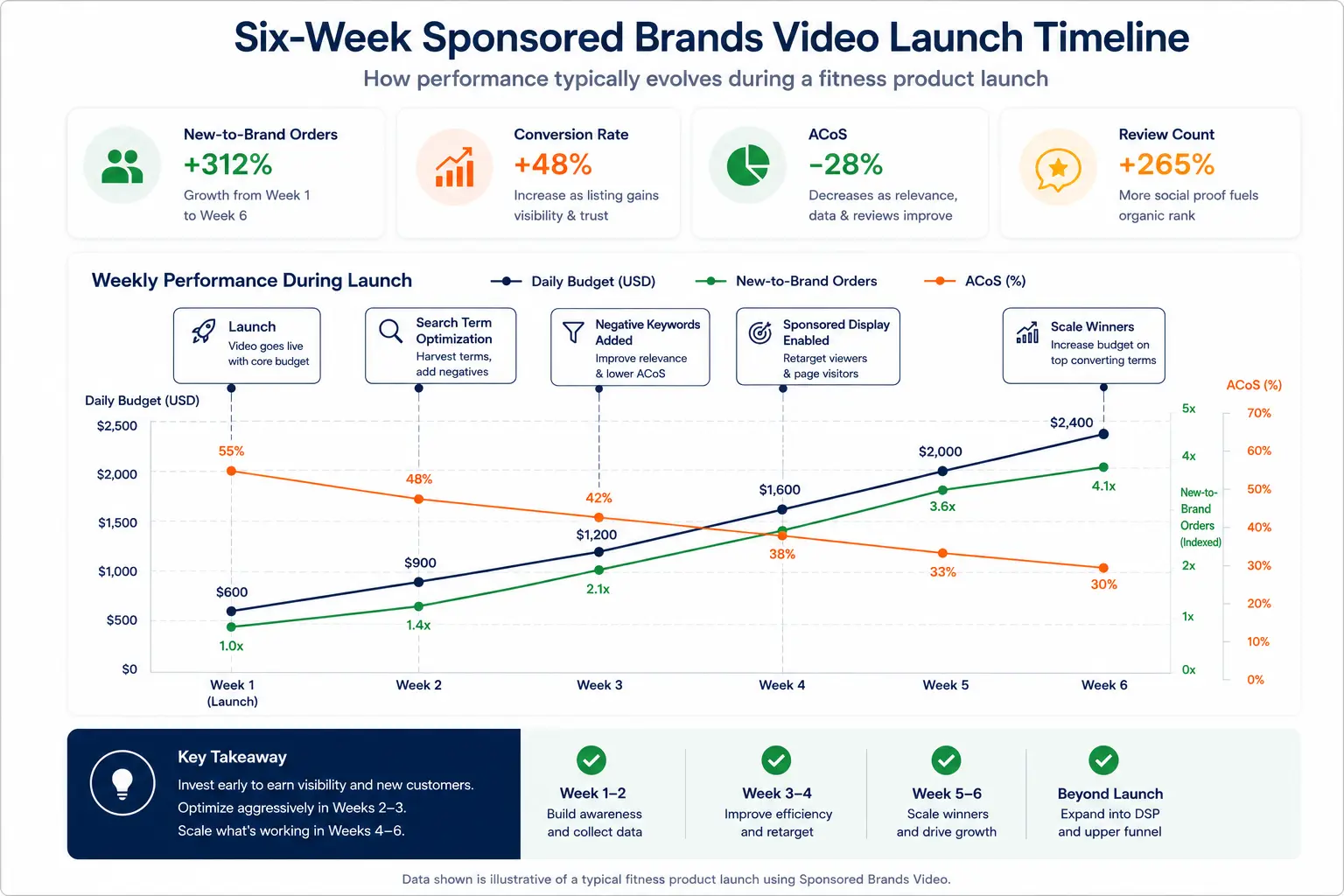
Launching is a sequence, not a switch. Here is a calendar that has held up across real fitness launches.
Weeks minus two to zero (pre-launch). Confirm Brand Registry. Produce one strong video plus two variants.
Build the product detail page to convert: strong main image, benefit-led bullets, A-plus content, and a listing video. Nothing you spend on ads matters if the page cannot close.
Week one. Turn on Sponsored Products for exact-match, high-intent keywords and Sponsored Brands Video for your two or three category head terms.
Keep bids deliberate. Let the data breathe for a few days before touching anything.
Weeks two to three. Read the search-term report. Move winning terms into their own tightly themed campaigns, and add negatives for the junk.
This is where the Search Query Performance report earns its keep, showing you which queries actually convert versus just click.
Weeks three to four. Introduce Rule-Based Bidding to hold a target ACoS, and test Maximize New-to-Brand bidding on the video campaign if acquisition is the goal. Layer in Sponsored Display to retarget viewers.
Weeks four to six. Put more budget behind what converts, cut what does not, and push for review velocity through Amazon's legitimate programs.
By now the video that felt expensive in week one is usually your most efficient new-customer channel.
A polished video with a bad result almost always traces back to one of a few causes, and none of them are the camera.
The product detail page is the leak. Video gets the click; the page has to close it. If your main image is weak, your Featured Offer (Buy Box) is unstable, or your reviews are thin and unanswered, the ad is paying to send traffic to a page that cannot convert.
Fix the page first.
The first frames waste the muted window. If the opening three seconds are a logo animation or a black fade, you spent your best real estate on nothing. Lead with the product in motion.
The targeting is too broad. Bidding on huge generic terms drains budget on browsers who were never going to buy this specific item, so tighten to terms with real purchase intent and let ad relevance climb. And you judged it too soon.
New-to-brand acquisition is a launch metric, not a day-three metric, so give the campaign a fair window before you call it. If you are staring at a high ACoS and cannot find the cause, a structured Amazon PPC audit will usually surface it in an afternoon.
The brands that win launches are not the ones with the prettiest ads. They are the ones who read the data the format hands them.
Brand Analytics shows how shoppers search and where your product sits against competitors on your core terms.
Search Query Performance breaks a keyword into impressions, clicks, and purchases at the query level, so you can see exactly where your video earns the click but loses the sale.
Amazon Marketing Cloud (AMC) is the measurement layer that stitches formats together, so you can see how a shopper who saw your video and later bought through Sponsored Products actually traveled.
For a launch, AMC answers the question every other tool dodges: did the video assist orders it never got direct credit for? It usually did.
You do not need all three on day one. But knowing they exist changes how you plan, because it turns "run video and hope" into "run video and measure."
That is the quiet advantage a good Amazon PPC management partner brings to a launch: not just running the ads, but reading what they say.
Most fitness and supplement founders can produce a decent video; the harder part is the structure around it, and that is the work we do every day as an Amazon PPC agency.
If a launch is coming, or one already stalled, a short Amazon strategy session will show you exactly where video belongs in the plan.

Talk with an Amazon PPC strategist to launch Sponsored Brands Video, increase new-to-brand orders, and build momentum from day one.
Get an Amazon PPC audit to launch Sponsored Brands Video with the right targeting, budget, and structure for faster new customer growth.