Amazon PPC for Baby Brands: How to Scale Past $100K/mo Without Losing Margin
Read more
.png)
Montessori toy brands win Amazon PPC by defending an unprotected brand name, bidding around holiday and gifting seasonality, and pairing Sponsored Brands with strict toy-safety compliance.
A category playbook for Montessori toy sellers who want lower wasted spend and a stronger share of a fast-growing, crowded niche.
Montessori toys sit in a strange position on Amazon. Maria Montessori's educational method is over a century old, and courts have treated "Montessori" as a generic, descriptive term rather than a protectable trademark.
Any seller can call a wooden shape sorter a "Montessori toy," and most do.
That single fact reshapes the advertising math. Demand is real and growing.
The global Montessori learning toys market was valued near $9.16 billion in 2025 and is projected to reach $14.77 billion by 2033, a steady climb driven by parents actively searching for developmental, screen-free play.
But supply is unusually crowded for the demand, because there is no brand gate keeping new sellers out.
Search "montessori toys" on Amazon and you will find hundreds of near-identical wooden puzzles, busy boards, and shape sorters from sellers you have never heard of, all bidding on the same handful of keywords.
Pull up any existing guide to "Amazon PPC for toy brands" and you will notice the same gap. Even Amazon's own toy and game advertising solutions page speaks to the category in general terms: seasonality, discoverability, gifting.
None of the current toy-PPC content grapples with what happens when the product name itself cannot be trademarked.
For a Montessori brand, Amazon PPC is not just a growth lever. It is the only fence you can build around a name that legally belongs to everyone, and that is the strategy problem this playbook is built to solve.

Toys & Games runs cheaper than the Amazon average on both metrics, but do not read that as an easy category.
Average cost-per-click across all Amazon categories sits near $1.22, with Toys & Games closer to $0.78 per click. Average Advertising Cost of Sale (ACoS, ad spend divided by ad-attributed sales) in the category runs near 28%, slightly below the platform-wide 29.6% average.
Conversion rate in Toys & Games runs slightly above the site average, near 12%, which makes sense: a parent who clicks a Montessori-labeled shape sorter has usually already decided to buy something in that category.
The catch is seasonality. Toys & Games is one of the most seasonal categories on Amazon, with a heavy concentration of sales from October through December and secondary spikes around back-to-school and Mother's Day gifting windows.
A flat, year-round ACoS target will either waste spend in the slow months or under-bid you out of visibility during the exact eight weeks that carry the category's revenue.
If you are new to reading these numbers against your own margin, this Amazon PPC for beginners guide walks through ACoS and break-even math from the ground up before you apply the seasonal layer on top.
Because "Montessori" is a generic descriptor and not a registered trademark you can lock down, competitors are legally free to bid on your exact brand name, your product line names, and your best-selling ASINs.
The only thing standing between you and a competitor stealing your branded-search traffic is an always-on defense campaign.
Run an exact-match Sponsored Products campaign on your own brand and product names with a bid high enough to hold the top slot, every day, not just during launches.
Pair it with Sponsored Brands at the top of search results on your brand terms and your core category terms ("montessori shape sorter," "wooden busy board"), because a Sponsored Brands banner above the organic results blocks a competitor from wedging their listing in front of a shopper who already searched for you by name.
Branded defense campaigns in a crowded, unbranded category like this one usually carry a lower ACoS than any other campaign type you run, because conversion on your own name is high. That efficiency is exactly why skipping it costs more than it saves.
This dynamic is closely related to search query cannibalization, where your own branded and non-branded campaigns start competing against each other or against a competitor's conquesting campaign for the same query.
If your Search Query Performance (SQP) reports show your branded impressions dropping while a rival's non-branded campaigns climb on your terms, that is the signal to tighten defense immediately.
This guide to branded traffic cannibalization breaks down how to read that report correctly.
Most Montessori sellers carry a wide catalog: shape sorters, busy boards, stacking toys, sensory bins, practical life sets. Treating every ASIN the same way in one campaign wastes budget on slow movers and starves the SKUs actually driving revenue.
A structure that works for this category has four layers:
Because the category is so fragmented, weekly search-term isolation matters more here than almost anywhere else on Amazon. Pull the search-term report every week, move proven converters into the control layer, and add the near-misses to negatives before they burn more spend.
If your account has plateaued past this point and you are unsure which layer is leaking budget, a full Amazon PPC competitor analysis will usually show exactly which sellers are outbidding you on which terms and why.
Brands that have made this jump before describe a similar structural fix in how to scale Amazon PPC past $100K a month, even outside the toy category.
Bid seasonally on purpose, not by accident. October through December can account for a third or more of a toy brand's annual Amazon revenue, and Montessori-labeled gifts specifically spike as "educational gift" search volume rises alongside general holiday shopping.
Raise budgets and bid ceilings starting in early October, well before the search volume peaks, so your listings have already built review velocity and Best Seller rank by the time shoppers are actively comparing options in late November.
Outside Q4, treat back-to-school (July through August) and spring gifting occasions as smaller, secondary pushes, and pull bids back to a steady-state target in the slow months of January through March.
A single flat ACoS target across all twelve months either overspends in the quiet season or under-bids you out of visibility during the eight weeks that matter most.
Model your own seasonal curve against last year's sell-through data before you set next year's budget calendar.

Compliance is not a side issue in this category. It is a prerequisite for advertising at all.
As of the mandate that took effect in 2024, toys sold in the United States must meet ASTM F963 as a federal Consumer Product Safety Commission (CPSC) mandatory standard, not a voluntary industry guideline.
That means every Montessori toy ASIN needs a valid Children's Product Certificate backed by third-party lab testing before it can legally ship, and Amazon has been actively enforcing testing documentation requirements on toy listings.
An ASIN flagged or suspended for missing compliance documentation cannot run ads at all, so a compliance gap can silently kill a campaign you were still optimizing.
Second, listings that clearly reference safety testing and age-appropriate material claims (non-toxic finishes, choke-hazard testing for small parts, FSC-certified wood) convert better in a category where parents are buying for a toddler's mouth and hands, not just their imagination.
Review the CPSC's toy safety guidance and the federal rule mandating ASTM F963 before your next PPC push, and build the certification status into your pre-launch checklist, not an afterthought after ad spend has already started.
When your category name cannot be owned, your listing has to do the differentiating that your brand name legally cannot.
Enroll in Amazon Brand Registry as soon as you qualify, since it gives you access to A+ Content, a Brand Store, and Sponsored Brands, all of which let you show material quality, age-grading, and safety testing in ways a plain bullet-point listing cannot.
Build your Store around use case and age range rather than a generic "Montessori" grid, since parents searching this category are usually shopping for a specific developmental stage: fine motor skills at 12 to 18 months, practical life skills at 2 to 3 years, early math and language from 3 upward.
Segment your Sponsored Products and Sponsored Brands campaigns the same way.
A shopper who lands on an age-specific, safety-forward Store page converts at a meaningfully higher rate than one who lands on a generic "shop all Montessori toys" catalog page, because you have done the trust-building the category name alone cannot do for you.
The costly mistakes in this category are rarely dramatic. They are quiet leaks that compound over a year.
They treat their catalog like a portfolio, not a pile of listings. Hero SKUs with strong review velocity get aggressive, seasonally adjusted bids.
New launches get a defined 60 to 90 day runway to earn rank before being held to a mature ACoS target. Slow movers get capped, not abandoned.
They also close the loop between compliance and conversion. Safety testing is not filed away, it is featured: certification badges in A+ Content, age-range call-outs in the title and bullets, and material safety claims in the Store.
That combination of tight branded defense, seasonal bid discipline, and visible trust signals is what separates a Montessori brand doing steady six figures on Amazon from one still fighting for a share of a category it cannot legally own by name.
If your account is spending against this category without a defense layer, a seasonal bid calendar, or a compliance-first Store, that gap is usually structural and fixable in one audit cycle.
A focused Amazon PPC audit from Amplivus will show exactly where spend is leaking and which of these levers moves your number first.
As an Amazon PPC agency that works across crowded, generic-term categories, we would rather start with a plain conversation about your catalog than a pitch.
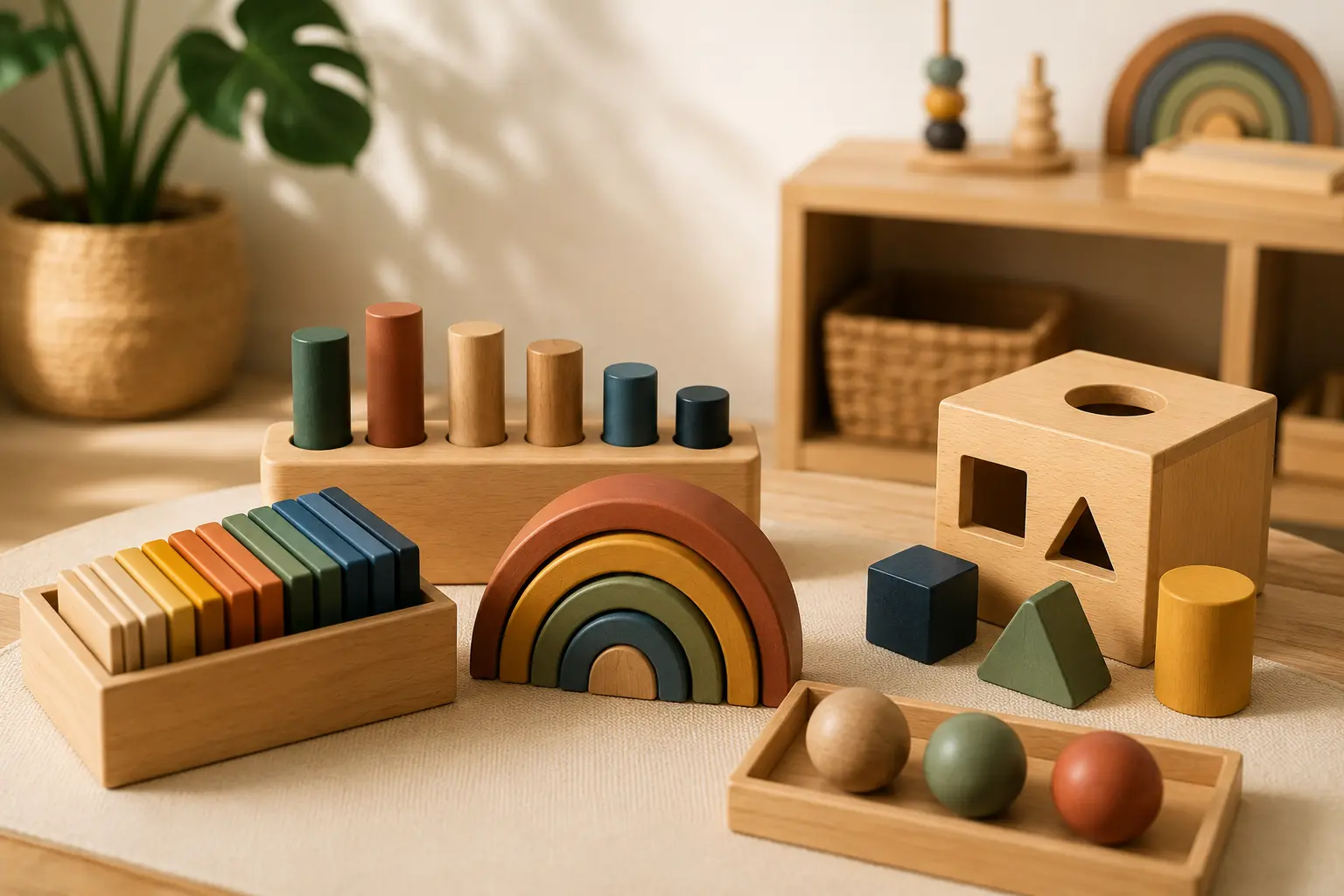
You can book a free Amazon PPC strategy session and walk through your current campaign structure together.Montessori-inspired wooden educational toys including stacking arches, shape sorter, counting pegs, colour blocks, and sensory learning toys arranged in a modern playroom, representing Montessori toy brands for Amazon PPC strategy.

Talk with an Amazon PPC strategist to improve brand defense, increase profitable traffic, and grow your Montessori toy sales year-round.
Get an Amazon PPC audit to strengthen brand defense, improve campaign structure, and stop competitors stealing high-value traffic.