SQP Cart-Add-to-Purchase Drop-Off: A Diagnosis Guide
Read more
.png)
Branded cannibalization shows in SQP when you rank 1-3 organically with high purchase share: the ad captures sales you'd win free. Confirm with a holdout test.
Summarize in ChatGPT

A data-driven way to tell whether your branded ads add sales or just move organic orders into the paid column.
A 6% ACoS on your own brand name is not proof of efficiency. It is often proof that you are buying clicks you would have won for free.
That gap between how good branded ads look and how little they actually add is where branded traffic cannibalization hides. The fix is not another opinion about brand bidding.
It is a data check you can run inside Search Query Performance (SQP), the report already sitting in your Brand Analytics dashboard.
This guide is for Amazon sellers, brand owners, in-house pay-per-click (PPC) managers, and agency analysts who suspect their branded spend is padding the numbers.
You will get the exact metrics to read, a decision rule with thresholds, a worked example, a cheap incrementality test, and a weekly checklist.
The short version up front: when your organic listing already ranks 1 to 3 for your brand name and your paid purchase share is very high, your ads are probably moving organic sales into the paid column, not creating new ones.
Branded traffic cannibalization is when your Sponsored Products or Sponsored Brands ads capture sales on your own brand terms that your organic listing would have won anyway.
The ad gets the credit. The sale was never at risk.
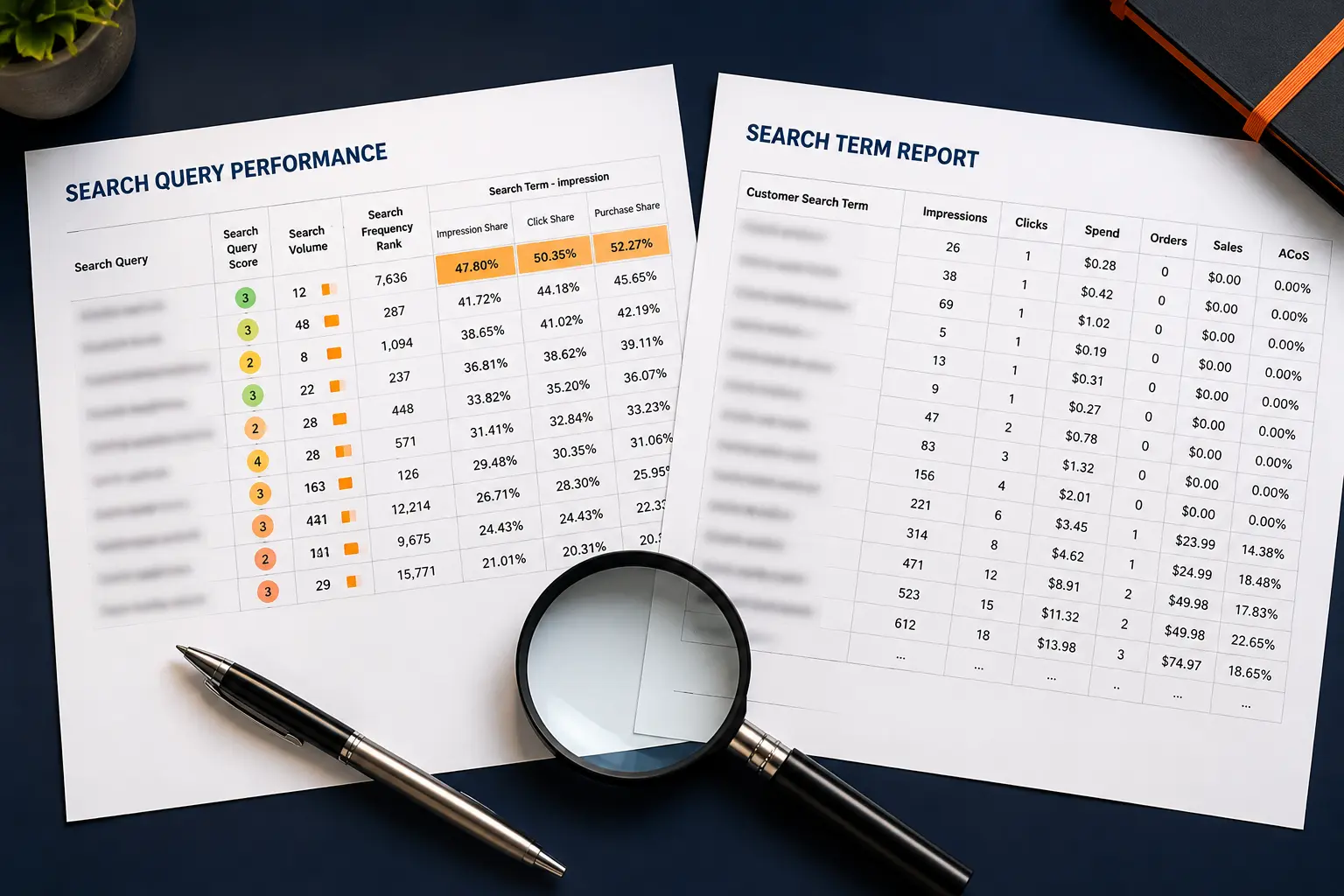
SQP is where this shows up, because it reports your share of impressions, clicks, cart adds, and purchases for each search term against the rest of the market.
You find it in Seller Central under Brands, then Brand Analytics, then Search Query Performance, and Amazon Brand Registry enrollment is required.
If you have not run the scan before, our guide on how to read your SQP report covers the basics.
The trap is the math behind ACoS. A shopper who types your exact brand name already decided to buy. They convert fast and cheap, so Advertising Cost of Sale looks excellent.
But a low ACoS measures correlation, not cause. It cannot tell you whether the ad earned the sale or just stood in front of a buyer already walking to the register. That distinction has a name: incrementality.
An incremental sale would not have happened without the ad. A cannibalized sale would have happened regardless. SQP gives you the raw material to tell them apart.
Four share metrics matter, and you read them as overlap signals, not vanity stats.
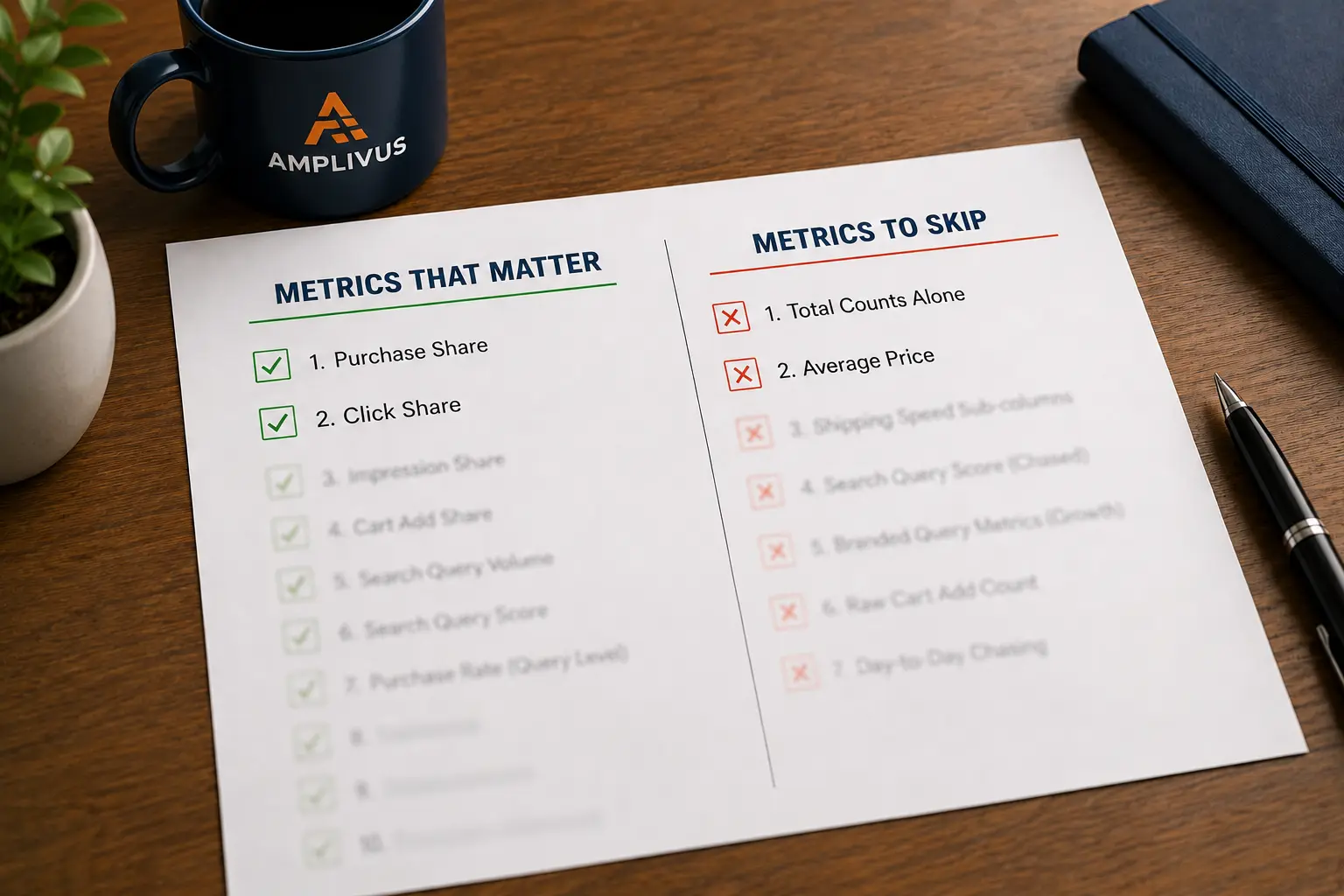
SQP breaks the funnel into impression share, click share, cart add share, and purchase share, each shown as your slice of the total market for that exact query, a set our breakdown of the SQP metrics that matter covers in full.
The tell is simple. On a branded query where you already own organic rank 1 to 3, a purchase share near total market means almost every buyer was yours before the ad ran. Layer in New-to-Brand (NTB) data from your Sponsored campaigns.
If NTB share on the brand term is low, the ad is mostly serving existing brand shoppers, which is the signature of cannibalization.
Compare that to a non-branded query, where ads genuinely expand reach and NTB share runs higher. The contrast between the two is your fastest read.
Stop guessing and use a threshold. The table below is an Amplivus diagnostic rule of thumb, not an official Amazon benchmark. Pair your organic rank for the brand term with your branded purchase share, then read the verdict off it.
The logic is the relationship between rank and share. The higher you already rank organically and the larger your purchase share, the smaller the pool of sales an ad could possibly add.
When you own the top slot and nearly all purchases, the ad has almost nothing left to win that you would not win for free. Treat the table as a trigger, not a final answer. A high reading is a reason to investigate, not an automatic pause.
Numbers make this concrete. The figures below are a hypothetical, illustrative SQP row for a mid-size supplement brand bidding on its exact brand name, not a specific client account.
On the surface, a 5.8% ACoS looks like a win nobody should touch. Read it through the rule and the picture flips. Organic rank is 1, purchase share is 93%, and only 7% of branded orders are new to the brand.
That means roughly 93% of buyers already belonged to the brand, and the listing already sat first organically. The likely reality: most of those paid sales would have landed organically.
The ad is renting a sale you already owned. This row lands squarely in the top line of the table, so the next move is a controlled test, not an immediate cut.
You do not need Amazon Marketing Cloud (AMC) to test this. The cheapest reliable method is a bid-down holdout, and any seller can run it in a week. Run it like this:
The reason this works is that organic backfills cannibalized clicks. When you pull the ad, shoppers who would have clicked the sponsored slot simply click the organic listing instead, and the sale still closes.
This is not a fringe theory. A landmark field experiment in paid search, run at eBay by economists Blake, Nosko, and Tadelis and published in Econometrica, found brand-keyword ads produced no measurable short-term lift because those buyers were already arriving through organic search.
In one test, 99.5% of brand-search traffic reached the site even with the ads switched off. The mechanism on Amazon is the same. Your brand name is your highest-intent query, which is exactly where cannibalization risk peaks.
One caution. Run the test for at least a week, ideally two, so a slow day does not skew the read.
And watch whether a competitor jumps into your top slot the moment you pull back, which changes the calculation.
Cannibalization is common, but "always cut branded ads" is the wrong lesson. Brand bidding earns its keep in specific, provable situations.
The test in every case is the same holdout. If total brand-term sales drop when you pull the ad, the spend is incremental and worth it.
If they hold steady, you found waste. Defense is a tactic with a measurable trigger, not a permanent line item.
The report is powerful, and it is easy to misread. A few traps to avoid.
Make this a habit, not a one-time audit. A short weekly routine keeps branded waste from creeping back.
Ten minutes a week beats one panicked audit a quarter.
Over time you build a clean record of which brand terms are incremental and which are passengers, which is exactly the evidence you need to defend a budget decision.
This pairs naturally with the wider dashboard review in our guide on finding hidden profit in Brand Analytics.
Branded cannibalization is not a reason to fear your own ads. It is a reason to measure them. The sellers who win the long game treat the brand name as a hypothesis to test, not a slot to defend on reflex.
Read the shares, run the holdout, keep what proves incremental, and redirect the rest toward queries where ads actually grow the brand.
If you would rather have it diagnosed for you, Amplivus runs this exact SQP and incrementality analysis as a free branded campaign audit. You can also book a strategy session to walk your own branded terms together.

Our Amazon PPC audit identifies branded traffic cannibalization, wasted ad spend, and incrementality opportunities using SQP data.
Discover if branded ads are creating new sales or cannibalizing organic revenue. Get a 24-hour SQP and PPC audit.