Amazon Ads in 2026: What Changed for Established Brands
Read more
.png)
Viral products like nugget ice makers break standard bidding because demand spikes and fades quickly. Bid by phase: prepare before launch, defend during peak demand, then taper spend after.
Summarize in ChatGPT
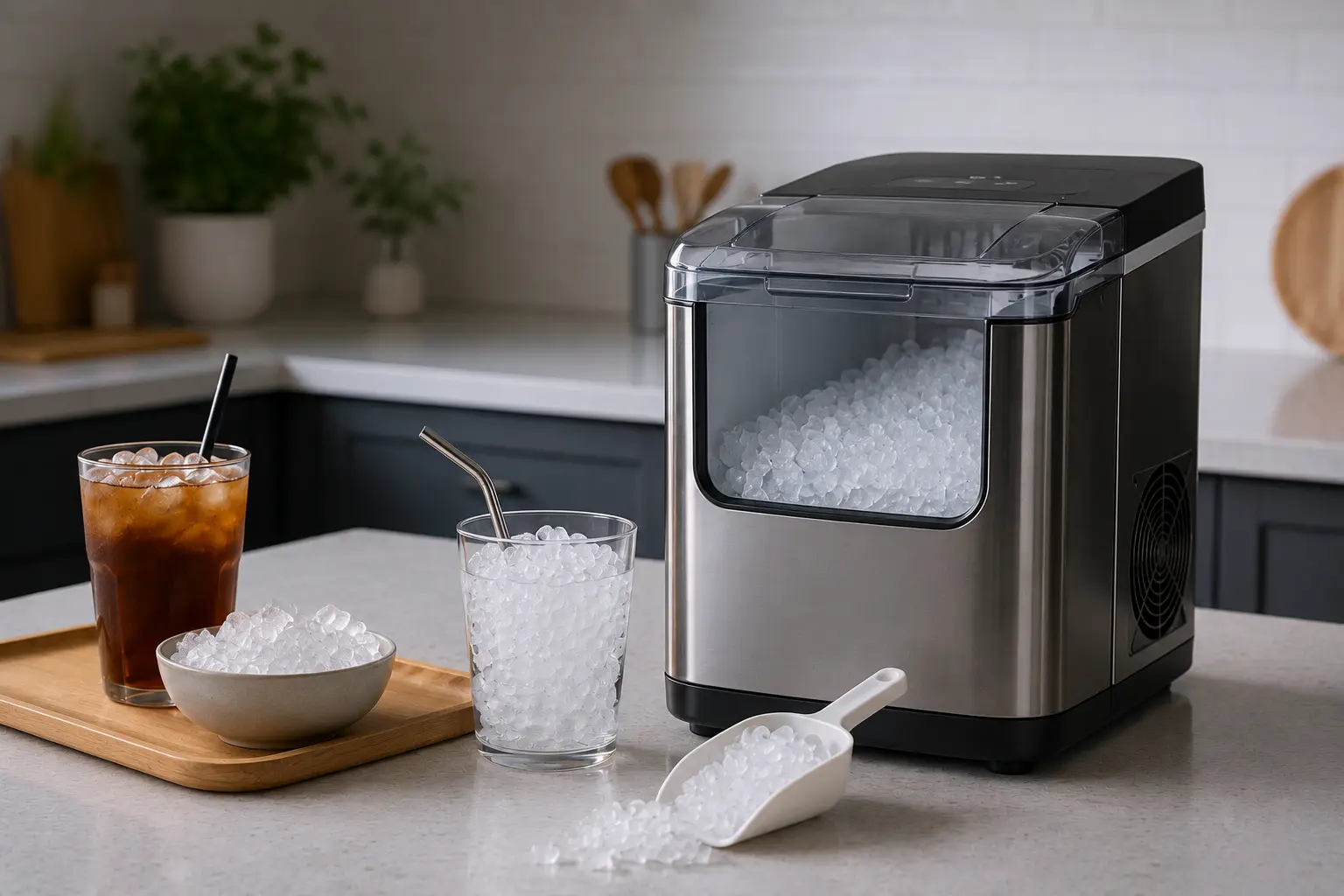
There is a specific kind of Amazon product that makes a good ad manager look bad through no fault of their own: the viral one. Nugget ice makers are the textbook case.
For years they sat as a quiet appliance, then chewable "good ice" took off on social video, and demand for countertop nugget ice makers went vertical.
A brand that was comfortably managing a steady account suddenly watched its Advertising Cost of Sale (ACoS) swing wildly, its automated bids chase noise, and its budget cap out by noon.
The problem is not the ad manager. It is that standard Amazon bidding is built for a product with stable demand, and a viral product has anything but.
This guide is for kitchen and home brand owners and Amazon managers riding, or bracing for, a viral moment, and it lays out why the usual bidding advice fails and what to run instead.
It is the focused companion to our broader guide on how kitchen brands scale past $100K a month; here the lens is narrow and the subject is the auction.

Every automated bidding tool on Amazon makes one quiet assumption: that yesterday predicts tomorrow. Target-ACoS rules, dynamic bidding, and the learning period all lean on recent conversion history to decide what a click is worth.
That assumption holds for a steady seller and collapses for a viral one, because during a spike the relationship between a bid and a result changes faster than the algorithm can relearn it.
Watch what happens in practice.
As a nugget ice maker starts trending, conversion rate jumps because motivated buyers flood in, so an aggressive automated system reads the high conversion and bids up hard, right as competitors and cost per click are also climbing.
Then the trend cools, conversion rate falls, and the same system is still holding the elevated bids it learned last week, so ACoS blows out on the way down. The tool did exactly what it was told.
It was told the wrong thing, because the demand it was optimizing against was non-stationary.
The US small kitchen appliances market is full of these products precisely because kitchen gadgets are so shareable, which is why this is a category problem, not a one-off.
To bid well through a spike, you have to see its shape. A viral kitchen product moves through four phases, and each one wants a different posture.
There is the quiet baseline, before ignition, when demand is steady and low and the job is structure. Then ignition, when social video catches and branded and category searches climb fast, often before you have noticed the trend in your own feed.
Then the peak, a few intense weeks where conversion rate is high, competition floods in, and cost per click spikes.
Then the decay, when the trend cools and demand settles toward a new baseline that is usually higher than where it started but far below the peak.
The whole arc can run in six to ten weeks, faster than a seasonal curve and far less predictable, which is exactly why a fixed budget rule and a set-and-forget bid strategy both fail.
The seasonal curve at least arrives on a calendar you can plan against; a viral curve arrives whenever a video catches, which could be a Tuesday in March with no warning.
That unpredictability is the whole reason the strategy has to be built in advance and switched on by phase rather than designed on the fly once demand is already moving.
Amazon's scale as a retail platform, documented in Statista's Amazon overview, means each phase plays out at real volume, so the cost of misreading the curve is measured in thousands of dollars a week.
The fix is to stop running one bidding rule and start running the rule that fits the phase you are in.

You cannot build a defensive account in the middle of a spike, so the pre-spike work is what decides how the peak goes.
Isolate your converting terms into exact-match Sponsored Products campaigns so you can pour budget into proven winners fast without your whole account chasing expensive broad terms.
Keep a small, always-on branded campaign live so there is no lag between noticing the spike and defending your name.
And watch your near-real-time data and branded search volume, because a rising branded and category search is the earliest signal that ignition has started, often days before sales fully catch up.
This is the counterintuitive part.
When demand spikes and conversion rate is high, the instinct is to let automated bidding run hot. Do the opposite on your hero campaigns.
Move them to Fixed bids or Dynamic bids down-only so the algorithm cannot bid you up into a loss as cost per click climbs, and concentrate that budget on the exact-match, top-of-search terms you already know convert rather than broad discovery at inflated prices.
You are not trying to find new keywords during a spike, you are trying to win every auction on the terms that were always going to convert, while a wave of new competitors tries to buy your traffic.
Keep broad discovery on a tight leash.
Budget pacing matters as much as bid mode here. A flat daily budget caps out by midday during a peak and leaves you invisible for the afternoon rush, so raise daily caps to two or three times normal on the terms that convert and check them through the day rather than once.
This is also the phase where the account needs eyes on it hourly, not weekly, which is precisely the work a done-for-you Amazon PPC management engagement takes over during a spike, since the cost of reacting a day late is highest exactly when demand is highest.
The same logic drives our playbook for TikTok-trending brands, which walks through the live-spike moves in more detail.
When the trend cools, the mistake is to switch everything off.
The decay is where you keep the rank the spike paid for. Pull broad-match spend back toward baseline, keep your branded defense fully funded, and route budget into retargeting the large pool of shoppers who viewed during the peak but did not buy.
Reviews earned during the surge keep posting for weeks and keep lifting conversion, so a listing that holds steady velocity through the decay keeps far more of its rank gain than one that lets spend collapse the moment the trend stops trending.
The corridor-pacing discipline in our walking pad Q4 guide is the same idea applied to a seasonal spike.
No bidding strategy survives a stockout, and a viral product is the single most likely place to hit one.
Running out of stock mid-spike does not just pause sales, it interrupts your fulfillment record at the exact moment Amazon is paying closest attention, and in a category where the buyer might have picked one of ten near-identical makers, that lost rank is expensive to rebuild.
So the real bid control is inventory-aware pacing: as your days of cover get thin, pull bids down rather than paying premium cost per click into a listing about to go unavailable.
The uncomfortable version of this advice is knowing when to throttle a breakout on purpose.
If manufacturing lead time runs weeks and your stock covers only days at the new velocity, the right call is often to pull broad spend back hard, let free organic search absorb the demand it is already generating, and hold branded defense as the only funded campaign until the next shipment lands.
That feels wrong in the middle of a breakout, but a stockout that tanks your rank costs far more over the following month than a temporarily smaller ad-driven week costs now.
A viral product attracts two things you have to price into your bids. The first is conquesters: competitors who bid on your brand name to intercept the shoppers a trend is sending your way, buying a customer who was already coming to you.
A funded branded exact-match campaign, backed by a Sponsored Brands headline on the same terms, is cheap insurance against that, and it is never the place to save money during a spike.
The second is dupes, the cheaper look-alikes that appear within a week or two of any kitchen product trending.
A Sponsored Display campaign targeting your own product pages, paired with a counterfeit or IP complaint through Amazon Brand Registry when a dupe copies your listing directly, protects the demand you created from leaking to a knockoff.
A viral moment generates an enormous pool of shoppers who watched, clicked, and did not buy, and that pool is the most valuable asset the spike leaves behind.
Retargeting it is where the post-peak margin lives. Sponsored Display re-engages the viewers who bounced, and at scale Amazon DSP reaches them on and off Amazon during the days a considered kitchen purchase takes to close.
This is also where Amazon Marketing Cloud earns its place, because it can show you which shoppers exposed to your spike-era ads converted later, which is the only way to value a viral moment beyond the last click.
New-to-brand metrics tell you how much of the surge is genuinely new households versus buyers you already had, which is the number that tells you whether the spike built a business or just rented a week of sales.
The metric that misleads most during a spike is last-click ACoS, because the spike inflates conversion and compresses the number in ways that will not last.
Steer by Total Advertising Cost of Sale (TACoS) and new-to-brand share instead. When TACoS holds or drifts down while total revenue climbs, the spike is building durable rank and organic sales.
When TACoS climbs alongside spend, you are overpaying into demand that is already cooling.
Watch these on a near-real-time basis during the peak, not on a weekly report, because a viral curve moves faster than a weekly cadence can catch, and the difference between reacting today and reacting next week is the difference between protecting margin and torching it.
A viral moment is high stakes and fast moving, which is exactly when a structural mistake costs the most.
If your account is riding a spike, bracing for one, or trying to recover the rank one left behind, a structured review of your bid strategy, campaign structure, and inventory pacing usually finds the leak faster than another round of guesswork.
As a specialist Amazon PPC agency, Amplivus runs this work for kitchen and home brands through demand spikes, so the next viral moment is a growth event rather than a scramble.
If you would rather see the gaps first, a free Amazon PPC audit will show where your bidding and pacing are leaking, and a short Amazon strategy session will map the phase-based plan before the next spike hits.
The near-real-time search-term monitoring that makes this strategy work, catching ignition early and watching branded click share through the peak, is covered in our guide on how to read your Amazon SQP report, which is worth setting up before you need it rather than during a spike.

Talk with an Amazon PPC strategist to build smarter bidding, protect inventory, and turn viral demand into lasting growth.
Get an Amazon PPC audit to build a phase-based bidding strategy, protect margins, and keep viral demand profitable.