.png)


Beyond Spreadsheets: The Amazon Tools Powering Real Growth
As an Amazon seller, you've probably felt the moment when the business stops feeling clean and starts feeling crowded. Keyword lists live in one spreadsheet. Bid changes live in another. Inventory notes sit in Slack, and profit tracking lags behind what your ad account is doing in real time. Growth doesn't usually stall because one thing broke. It stalls because too many moving parts stopped talking to each other.
That’s where the best amazon seller tools earn their keep. Good software doesn’t just save clicks. It changes how fast you can see a problem, how confidently you can make a decision, and how consistently you can repeat what’s working. For some sellers, that means one all-in-one platform. For others, it means a tight stack with one research tool, one PPC platform, and one analytics layer.
The hard part is that the market is crowded, and most roundups blur together. They list features, repeat vendor messaging, and avoid the part that actually matters. Which tools help a new seller get traction without drowning in complexity? Which ones make sense once ad spend, SKU count, and reporting demands start to climb? And when does software stop being enough on its own?
This guide is built from a practitioner’s perspective. The priority isn’t novelty. It’s utility. The tools below were chosen because they’re established, strong in a specific job, and relevant to the way Amazon businesses scale. Some are broad operating systems. Some are PPC machines. Some are intelligence layers that sharpen every decision around them.
If you're trying to choose the right tool for the job instead of just the loudest brand in the category, start here.
Table of Contents
- Building Your Perfect Tool Stack Example Scenarios
- Tool vs Team When to Engage an Agency like Amplivus
1. Helium 10
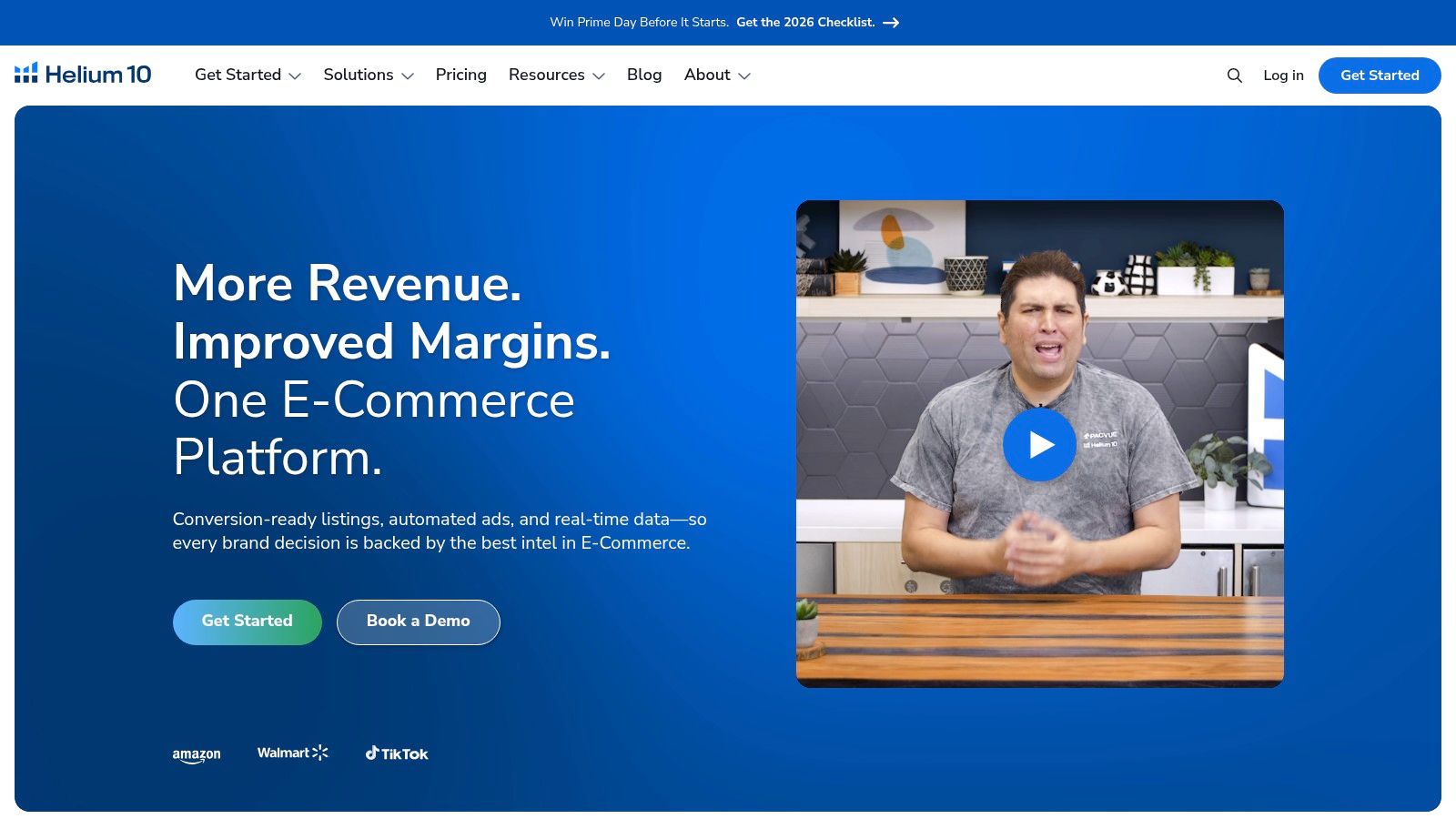
A seller launches a second or third ASIN, then the tool stack starts getting messy fast. Research lives in one app, keyword tracking in another, listing updates in a spreadsheet, and ad decisions in a separate dashboard. Helium 10 earns its place by pulling a lot of that work into one system.
That matters less for a brand with five figure monthly revenue and one product. It matters a lot once the catalog expands and the team needs one place to research keywords, monitor rankings, update listings, check profits, and keep tabs on product opportunities without constant exports.
Why Helium 10 still matters
Helium 10 is best viewed as an all-in-one operating layer, not a specialist tool. Black Box helps with product discovery. Cerebro and Magnet support keyword research. Listing tools help improve indexing and conversion. Profit tracking and market monitoring keep operators closer to margin and category movement. For sellers trying to build a usable system instead of collecting disconnected software, that coverage is the core value.
I usually recommend Helium 10 to brands that need coordination more than advanced automation. It is a strong fit for private label sellers, small in-house teams, and agencies managing the basics across several accounts. The training library also helps junior staff get productive faster, which matters if the account is growing and the founder is no longer doing everything personally.
What it does well:
- Keeps research and execution close together: Keyword discovery, listing work, and operational reporting live in the same environment.
- Reduces tool sprawl: That gets more important as a catalog grows and more people touch the account.
- Supports process building: Teams can standardize how they research launches, refresh listings, and review performance.
The trade-off is PPC depth. Helium 10’s ad tools are usable, and some sellers prefer the visibility of rule-based controls because they are easier to review and explain. But once spend climbs, campaign structures get more complex, or retail media reporting needs tighten, a dedicated platform or an Amazon PPC management service usually gives better control and better strategic oversight.
Best for: sellers who want an all-in-one tool by function, especially newer brands and scaling private label operators that are not ready for an enterprise stack. If your main problem is staying organized, Helium 10 is often enough. If your main problem is squeezing more efficiency out of a large ad account, it can become the foundation layer while a stronger PPC tool or agency handles the advertising side.
2. Jungle Scout
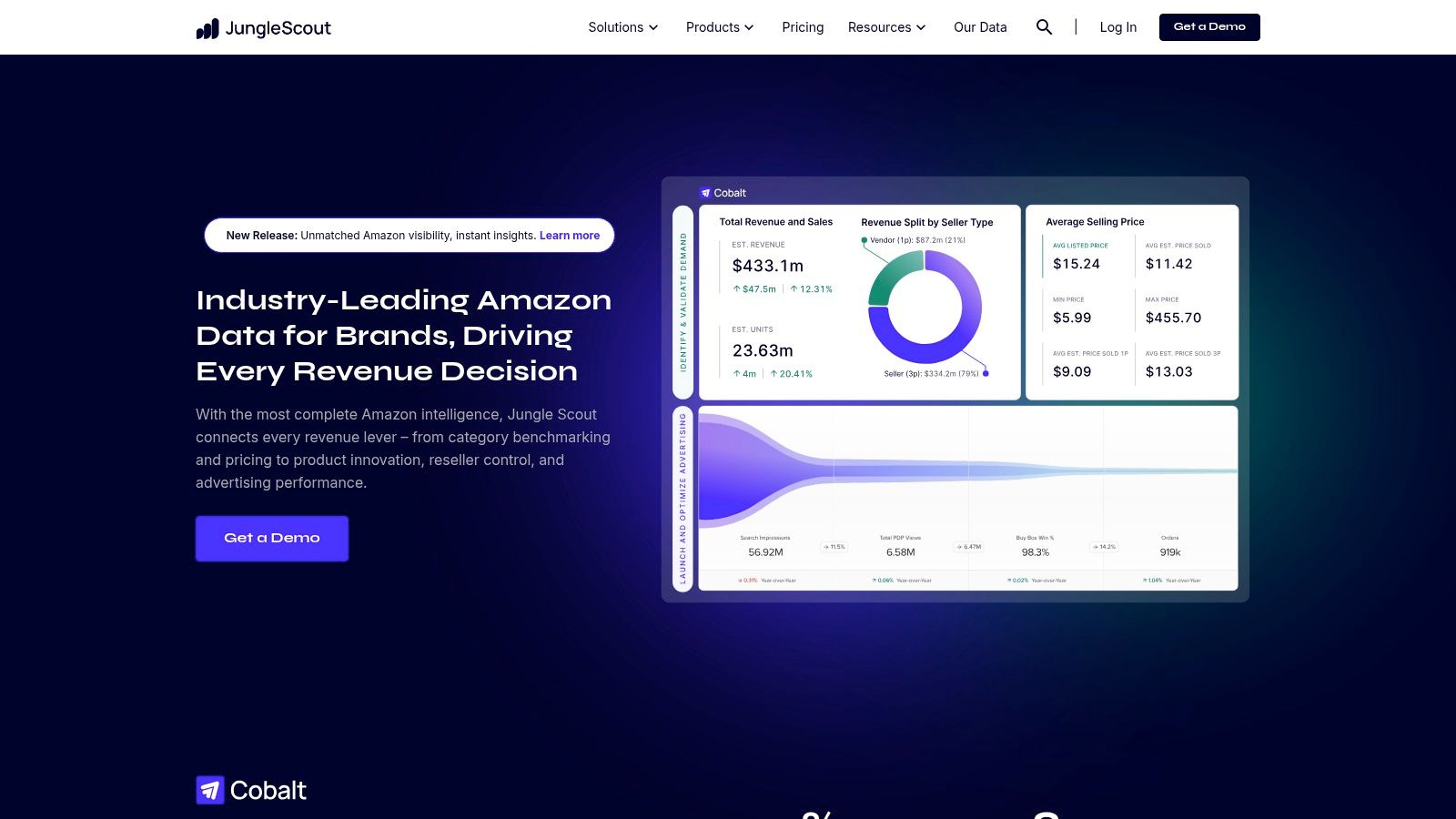
A common early mistake looks like this. A seller spends weeks refining a logo, sourcing samples, and building a launch budget before confirming whether the market is worth entering. Jungle Scout helps prevent that by putting product research first.
That is still its best use case.
Jungle Scout is one of the cleaner tools for validating demand, checking competitive pressure, and pressure-testing a product idea before inventory lands. I recommend it most often when the main question is, "Should we sell this?" rather than, "How do we optimize a large advertising account?" For newer brands, that distinction matters because picking the wrong product is usually more expensive than picking the wrong bid strategy.
Where Jungle Scout fits best
Jungle Scout works best in the intelligence layer of your stack. Use it to size a niche, compare adjacent product opportunities, review review-count saturation, and estimate whether a listing has enough room to compete. Sellers who follow a disciplined research process usually get more value from it than operators who only log in after sales flatten.
Its lineup also gives brands room to grow. The standard Jungle Scout plans are a practical fit for founders and small teams doing product discovery and launch planning. Cobalt is the step up for larger brands that want stronger market intelligence, share tracking, and category-level visibility without rebuilding their process from scratch.
Here is the trade-off I see in practice:
- Strong for pre-launch decisions: Useful for product validation, market sizing, and competitor review before you commit capital.
- Less compelling for PPC-heavy workflows: If advertising is the main performance lever, Jungle Scout usually supports the plan rather than running the channel.
- Good fit for sellers building a system: It rewards structured research, regular category review, and clear launch criteria.
That last point matters more than feature lists suggest. A tool like Jungle Scout does not fix weak judgment. It helps organized sellers make fewer expensive bets.
Best for: new sellers, launch-focused private label brands, and teams that need dependable research before they need advanced ad automation. Start with Jungle Scout if product selection is still your biggest risk. If your catalog is already established and ad spend is the bigger problem, pair your research stack with a stronger execution layer such as an Amazon PPC management service for scaling brands.
3. Perpetua
Perpetua is what I point brands toward when the conversation shifts from “How do we manage campaigns?” to “How do we standardize performance across a large catalog?” It’s built for advertisers who want goal-based automation, cleaner rollout across many campaigns, and executive reporting that goes beyond surface-level ad metrics.
The appeal is speed plus structure. You define the growth or profitability objective, build around that target, and let the platform automate much of the repetitive optimization logic. For brands with many ASINs, multiple ad types, or several stakeholders reviewing performance, that can reduce a lot of manual campaign maintenance.
When Perpetua is worth the jump
Perpetua works best when you already know your business well enough to set the right guardrails. If your catalog is unstable, margins are unclear, or listing quality is weak, software won’t save you. It will just automate confusion.
What it does well:
- Goal-led campaign building: Useful for brands managing toward profit, growth, or visibility priorities.
- Cross-channel support: Helpful if Amazon isn’t your only retail media environment.
- Executive visibility: Better fit for teams that need reporting for leadership, investors, or multiple departments.
What gives some sellers pause is opacity. Black-box automation can be powerful, but some operators don’t like handing over too much decision-making without seeing the exact logic behind every move. That’s a legitimate concern, especially if an internal team wants to learn from the system, not just use it.
The best PPC software saves time only if someone is still checking whether the strategy makes sense.
If your account is large enough that workflow discipline matters as much as bid adjustments, Perpetua becomes compelling. If you’re not there yet, a simpler setup often gives you more control and more learning per dollar.
Brands that want software plus hands-on strategic help often compare platform-only approaches with a specialized Amazon PPC management service. That decision usually comes down to whether your team wants to operate the machine or have experts run it for you.
Best for: mid-market and enterprise brands that need scalable PPC systems. The platform itself is available through Perpetua.
4. Pacvue
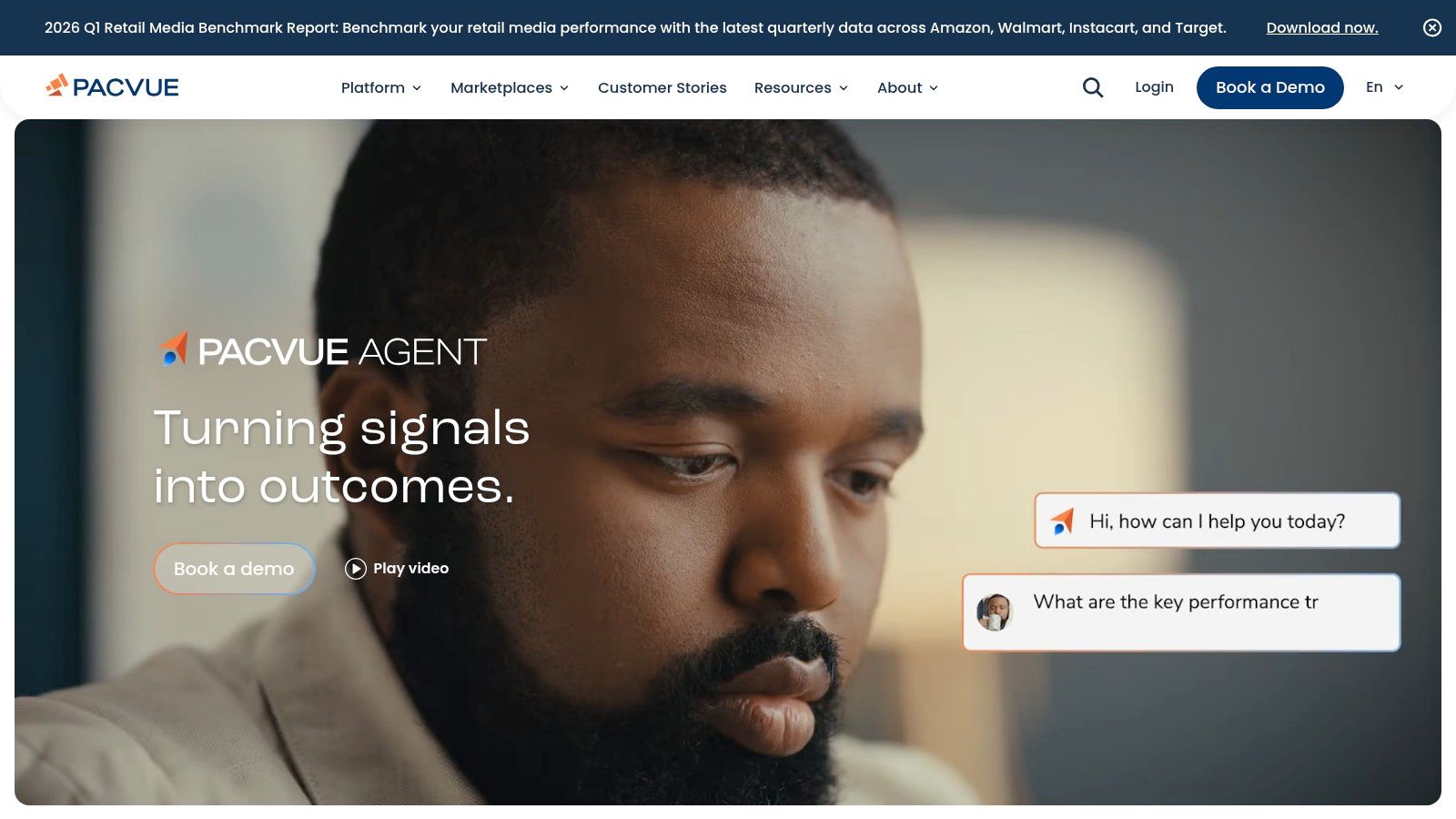
Pacvue is less about convenience and more about coordination. It’s one of the stronger choices when advertising can’t be managed in isolation from pricing, inventory, retail readiness, and Buy Box status. Large brands run into this problem fast. They don’t need one more bid tool. They need a command layer.
That’s Pacvue’s value. It brings Amazon Ads together with retail signals that directly affect whether ad spend should even be active. If an ASIN is out of stock, losing the Buy Box, or mispriced relative to the market, ad optimization alone becomes a wasteful exercise.
What Pacvue does better than simpler PPC tools
A lot of PPC platforms can lower manual work. Fewer can help teams avoid spending aggressively on products that operationally shouldn’t be pushed that day. Pacvue is stronger when multiple departments influence marketplace performance and the advertising team needs a fuller picture.
In my view, its best fit is:
- Complex catalogs: Especially when product availability and pricing volatility are frequent issues.
- Multi-retailer environments: Useful for brands advertising beyond Amazon.
- Agency and enterprise reporting: Better for organizations that need broader retail media visibility.
The downside is obvious. Pacvue is often too much platform for a small seller. If your account is straightforward, your SKU count is modest, and your team can manually monitor stock and Buy Box status, you probably won’t derive enough value from this level of software.
A related issue most “best amazon seller tools” lists skip is fragmentation cost. Revenue Geeks highlights the hidden ROI problem in tool sprawl, noting that many sellers stack several specialized tools instead of solving for the total workflow, including manual reconciliation and integration overhead in its ROI gap analysis. Pacvue is one of the tools that can reduce that kind of fragmentation, but only if your operation is complex enough to justify it.
Best for: enterprise brands, aggregators, and agencies managing large catalogs across retailers. Learn more from Pacvue.
5. Teikametrics
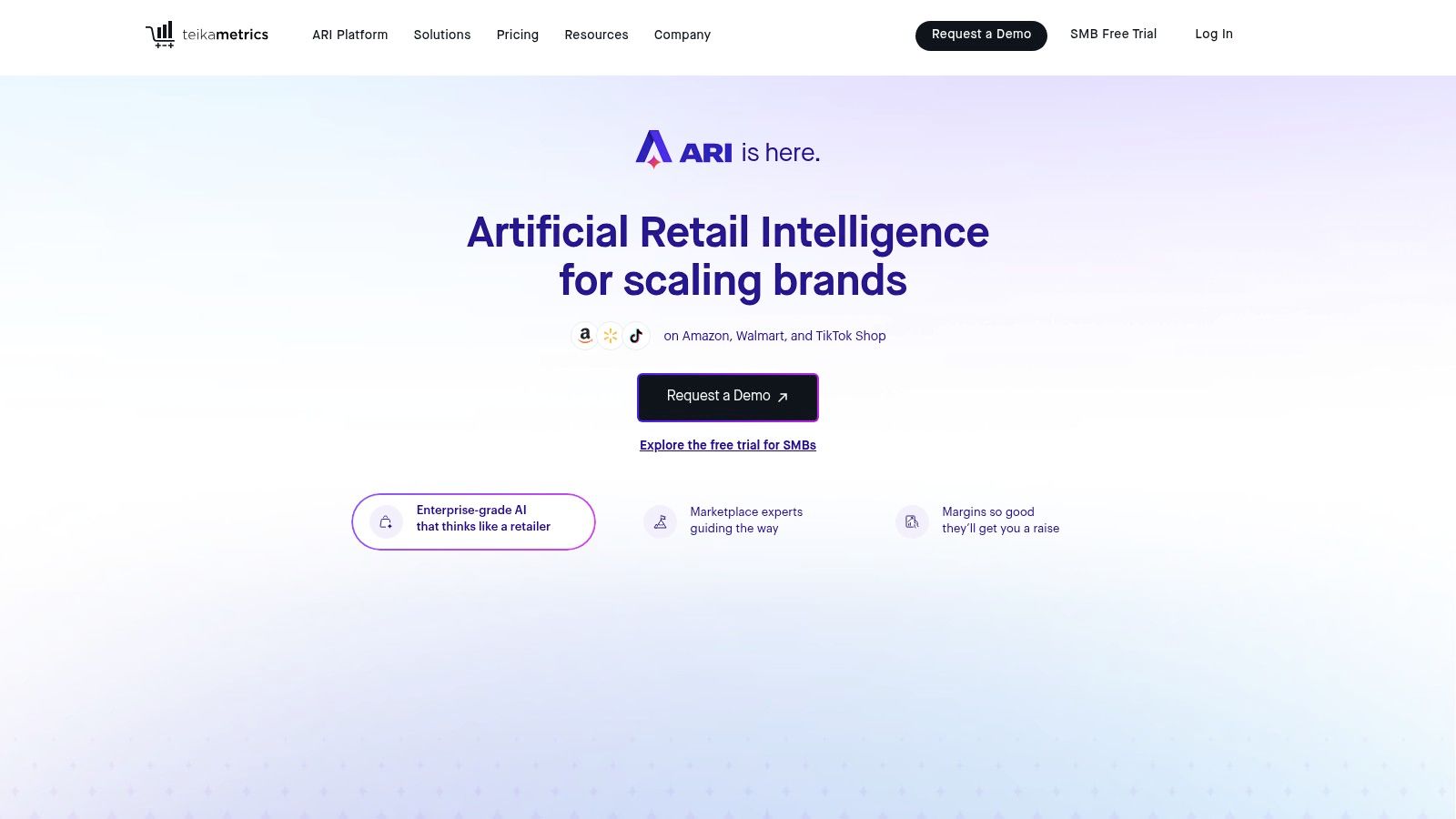
Teikametrics sits in a useful middle ground. It has enough automation and retail intelligence to support serious growth, but it’s often more approachable than the biggest enterprise platforms. That makes it attractive for brands that have moved past manual PPC management and want a clearer growth workflow without jumping straight into the most complex software tier.
The platform combines ad optimization with listing, catalog, and operational context. In practice, that matters because Amazon advertising performance rarely lives in a vacuum. Good bidding on a weak listing still underperforms. Strong keyword coverage on a poorly stocked ASIN still wastes momentum.
Who gets the most value from Teikametrics
I tend to like Teikametrics for brands that are scaling but still want a path they can understand. It’s especially useful when the team needs clearer reporting, better optimization discipline, and the option to add expert support without rebuilding the whole workflow.
Its strongest use cases usually look like this:
- Growing brands with maturing ad spend: The account is too large for casual management, but not yet in need of a massive retail media operating layer.
- Teams that want optional support: Some sellers want software first and services second.
- Operators focused on efficiency: Teikametrics tends to appeal to brands watching both spend and contribution closely.
One practical note. Before you trust any automation platform, get your TACoS logic straight. Too many sellers evaluate software only through in-platform ad metrics and miss what the broader account is doing. Running your numbers through an Amazon ACoS and TACoS calculator is a much better first step than toggling automation settings blindly.
Field note: If your team can’t explain why TACoS moved, adding more automation usually makes the diagnosis harder, not easier.
Best for: scaling brands that want PPC software with growth structure and optional service depth. The platform is available at Teikametrics.
6. Quartile
Quartile is built for scale, and it feels like it. This is not the tool I’d hand to a seller who’s still learning sponsored product basics. It’s a better fit for brands with meaningful ad complexity, large SKU counts, and a need for software plus experienced hands around it.
Its structure appeals to teams that want aggressive optimization with less manual intervention. Real-time bidding, granular campaign organization, and cross-channel capabilities make it useful for advertisers trying to manage Amazon as part of a broader retail media program rather than a standalone account.
Where Quartile makes sense
What separates Quartile from lighter PPC tools is the combination of algorithmic optimization and service support. Many brands don’t just want a dashboard. They want an operating model. Quartile leans into that.
That’s especially useful when:
- You need per-ASIN rigor: Large catalogs break down fast without structure.
- Leadership expects polished reporting: Quartile is designed for high-accountability environments.
- Your internal team is stretched: The software-plus-expert model can ease execution pressure.
The trade-off is that enterprise-style support usually comes with enterprise-style pricing and process. Smaller sellers often feel over-platformed in Quartile. They pay for capabilities they don’t yet need and inherit workflows they aren’t staffed to use well.
I also wouldn’t choose Quartile if your team strongly prefers total manual control over the exact mechanics of every optimization. It’s designed to scale decisions, not to expose every tactical knob for tinkering.
Best for: larger brands and agencies that want a hybrid model combining software and strategic support. You can evaluate it directly at Quartile.
7. Intentwise
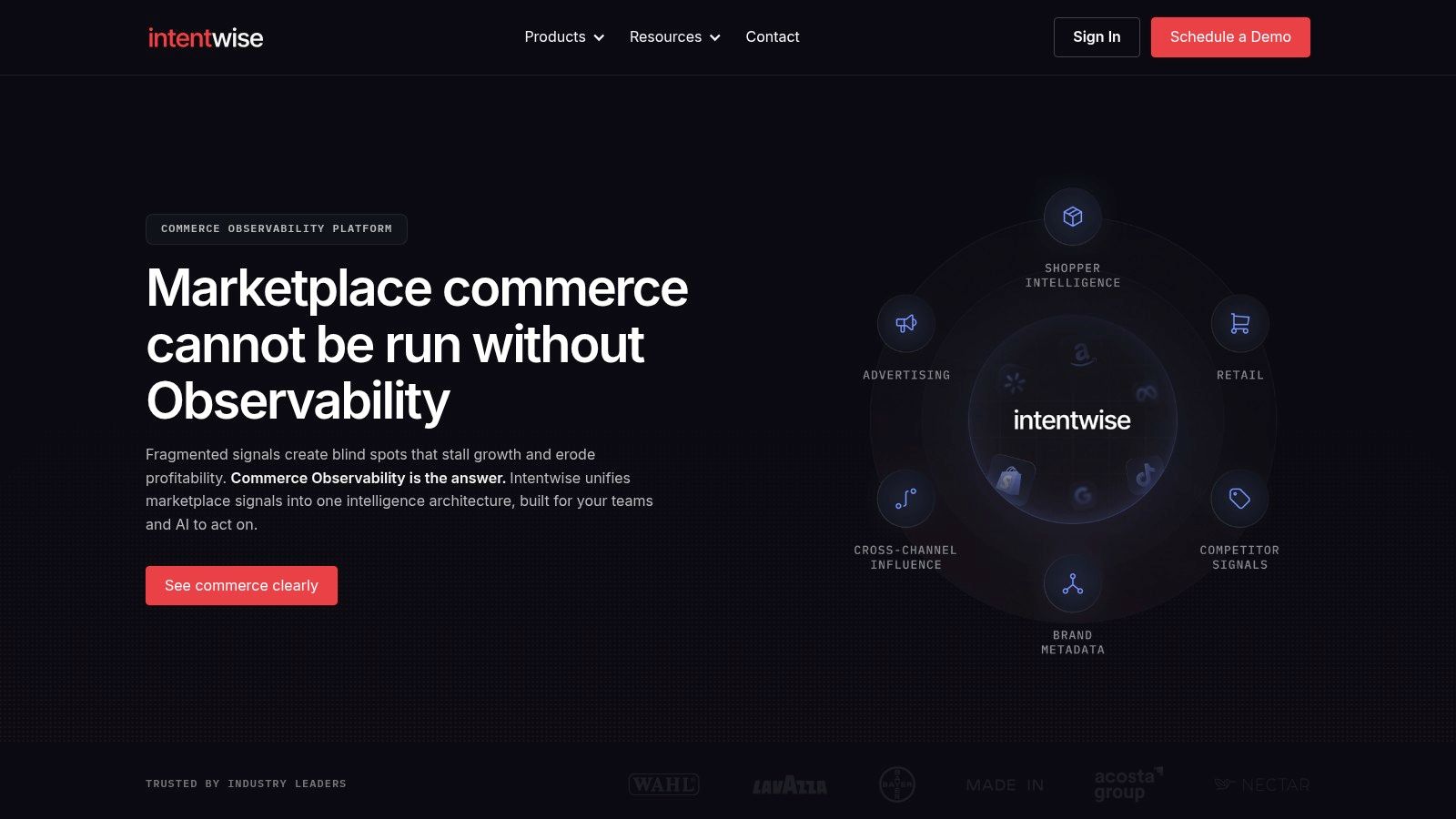
Intentwise is for teams that care about data plumbing as much as campaign performance. That’s a narrower audience than most software companies target, but it’s a valuable one. If you’ve ever lost hours reconciling Amazon numbers across dashboards, exports, and custom spreadsheets, you’ll understand why Intentwise has a loyal following.
Its strength isn’t just PPC automation. It’s the ability to create a more dependable analytics environment around Amazon data, including dashboards, pipelines, and Amazon Marketing Cloud workflows. For analysts, agencies, and advanced in-house teams, that matters more than another layer of bid suggestions.
Why analysts like Intentwise
Intentwise is modular, which is one of its best qualities. You can use the analytics and AMC layers alongside an existing PPC stack instead of ripping out your current workflow. That flexibility makes it more practical than tools that demand full adoption from day one.
Where it usually delivers the most value:
- Data integrity: Better for teams that need confidence in what they’re reporting.
- Custom diagnosis: Useful when performance questions go beyond campaign-level metrics.
- Agency workflows: White-label dashboards and structured data flows make client reporting easier.
This isn’t the easiest starting point for new sellers. If you don’t have someone on the team who understands Amazon data thoroughly, much of the value can go unused. Intentwise rewards maturity. It doesn’t create it.
Some teams don’t need more automation. They need cleaner truth.
Best for: analyst-heavy brands, agencies, and enterprise teams using AMC or building custom reporting layers. Explore the platform at Intentwise.
8. Scale Insights
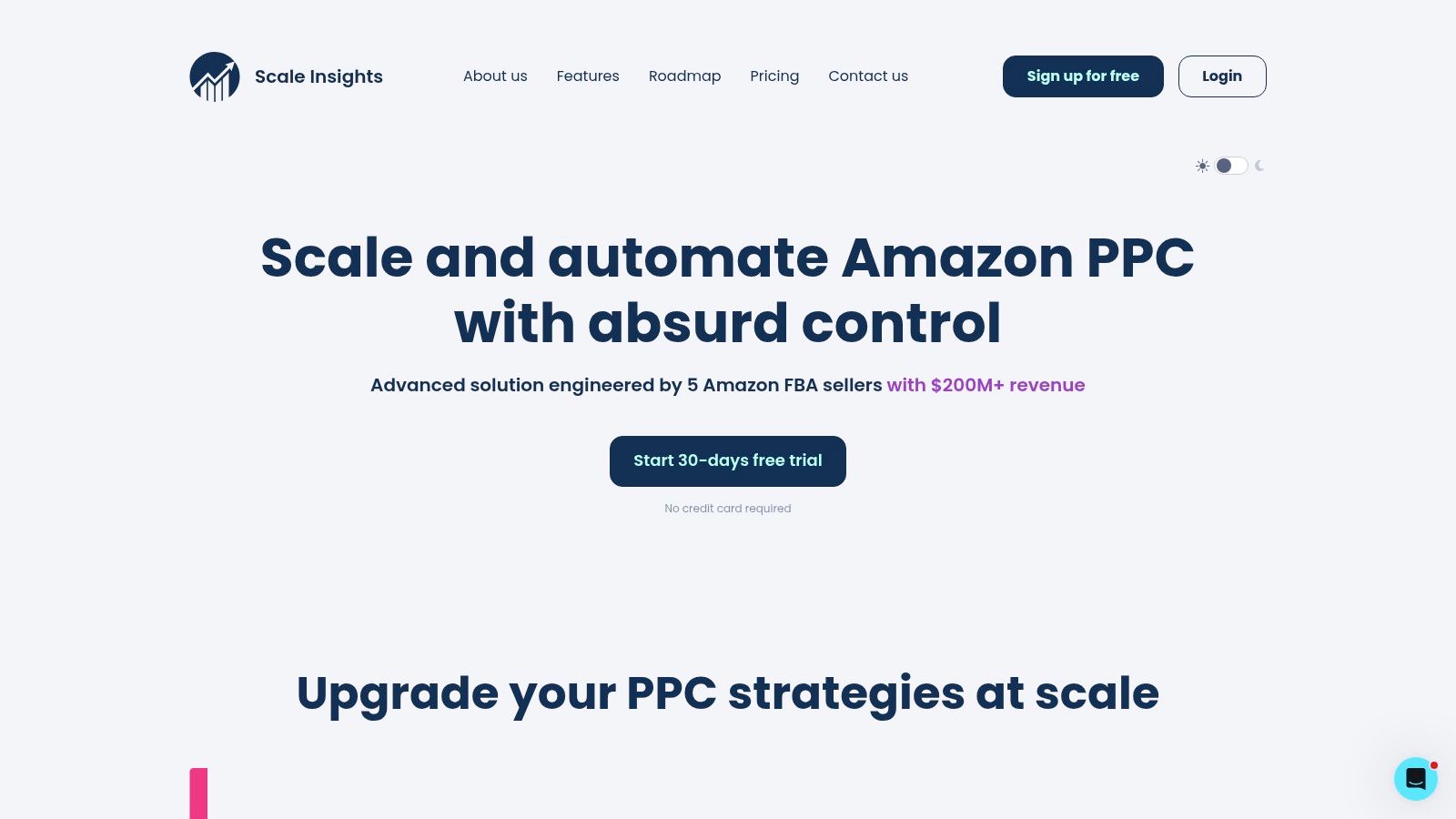
Scale Insights is one of the better options for sellers who don’t trust black-box automation and want to see the logic behind every change. That alone makes it stand out. A lot of PPC tools promise AI optimization, but fewer give practitioners enough visibility to understand why the system is making a move.
This platform was built with hands-on operators in mind. If your team likes setting rule conditions, previewing changes, checking logs, and controlling automation at a granular level, Scale Insights feels more like a cockpit than a mystery engine.
Why control-focused teams pick Scale Insights
The best use case is a brand or agency that already has PPC competence and wants to gain an advantage without surrendering oversight. This is not set-it-and-forget-it software. It’s more like set-it-carefully-and-scale-it-confidently software.
That works well in situations like these:
- Advanced tacticians: Teams that test aggressively and want audit trails.
- Large but hands-on catalogs: You need bulk control without losing ASIN-level specificity.
- Operators burned by opaque tools: Transparency becomes a deciding factor after a bad automation experience.
The downside is simple. If your team wants software to replace active management almost entirely, Scale Insights may feel too involved. It asks you to care about the details. For experienced buyers, that’s a feature. For overwhelmed teams, it can feel like another job.
One of the biggest mistakes I see is pairing a control-heavy platform with a team that doesn’t have time to review what it’s doing. In that scenario, a more opinionated managed system is often better.
Best for: experienced sellers and agencies who want highly transparent PPC automation. The platform is available through Scale Insights.
9. BidX
BidX is practical in a way many retail media tools aren’t. It gives brands multiple ways to engage, including self-serve, managed platform, and fully managed service options. That flexibility matters because not every Amazon team wants the same level of control, and not every team should.
I like BidX when a brand wants a middle path. They may want automation, dayparting, and structured ad management, but they also want clearer packaging around how much support they’re buying. That can make vendor selection easier than platforms that require a full sales process before you understand the basic operating model.
Best use case for BidX
BidX is useful for brands and agencies that want a retail media platform with room to grow into more advanced capabilities like AMC, DSP, and share-of-voice add-ons. It also works for organizations managing multiple accounts where permissions, reporting, and agency workflows matter.
Its practical advantages include:
- Choice of service model: Self-serve and managed options fit different team structures.
- Agency-friendly setup: White-label and multi-account support are relevant for service providers.
- Broader ad-type coverage: Helpful for brands graduating beyond a simple Sponsored Products setup.
The caution with BidX is commercial clarity. Published plan structures are helpful, but if you’re a U.S.-based brand, you still need to validate currency, terms, and what’s included. With platforms in this category, packaging can look straightforward until implementation starts.
If your account is still small and the team is learning fundamentals, BidX may be more platform than you need. If your campaigns are already disciplined and you want more structure without jumping straight into the heaviest enterprise stack, it becomes more compelling.
Best for: brands and agencies that want flexible engagement options around retail media execution. You can review the platform at BidX.
10. SmartScout
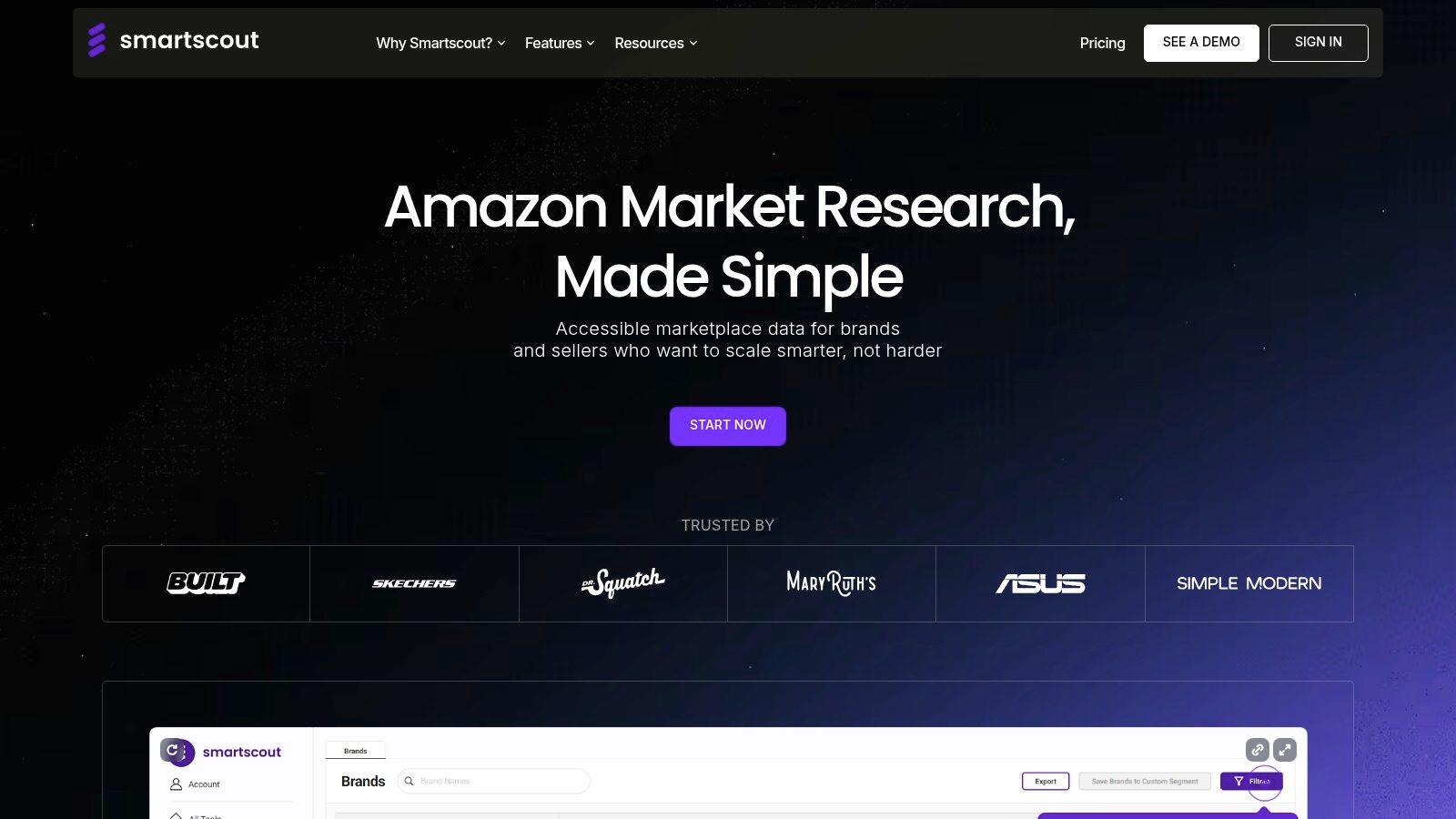
SmartScout isn’t a PPC optimizer, and that’s exactly why it belongs on this list. It’s an intelligence tool. It helps you understand who owns a niche, how brands are positioned, where competitor storefronts overlap, and which opportunities are worth chasing before you spend a dollar pushing traffic.
For research teams and aggressive advertisers, that’s a powerful layer. SmartScout’s free suite, including Amazon Search Trends and its Chrome extension, delivers insights to over 500,000 monthly users according to the 2026 usage summary from Reason Automation. That level of adoption reflects how useful market intelligence has become even before a seller invests in a paid stack.
Why SmartScout is the intelligence layer many sellers miss
Its paid positioning is also strong. SmartScout starts at $29 per month and covers more than 43,000 Amazon subcategories, according to the 2026 market intelligence overview from Seller Labs. That makes it one of the more affordable ways to get serious category visibility without committing to a heavier all-in-one suite.
Where SmartScout helps most:
- Competitor reconnaissance: Great for storefront analysis, brand mapping, and offensive targeting ideas.
- Research support for PPC: It sharpens what your ad team should test, defend, or conquer.
- Affordable intelligence layer: Especially useful if your main PPC platform lacks strong market context.
What it doesn’t do is manage campaigns directly. Sellers sometimes expect too much from it because the data is so useful. SmartScout tells you where the opportunity is. You still need another system, or another team, to execute on it.
If your strategy includes conquesting competitors, protecting branded territory, or finding product-targeting gaps, SmartScout is one of the more practical places to start. That’s also why many brands pair it with a structured Amazon PPC competitor analysis service once they want intelligence turned into active campaign strategy.
Best for: sellers, agencies, and brands that want sharper market intelligence feeding into PPC and product decisions. Explore SmartScout.
Top 10 Amazon Seller Tools: Features & Pricing Comparison
| Tool | Core features | UX & Quality (★) | Price & Value (💰) | Target 👥 / USP ✨🏆 |
|---|---|---|---|---|
| Helium 10 | Product & keyword research, listing tools, Profits dashboard, Helium10 Ads (rules, dayparting) | ★★★★, end-to-end stack, SEO+PPC alignment | 💰 Mid–high tiers; limits on users/ASINs at higher plans | 👥 SMB→scaling sellers; ✨ all‑in‑one research→ads; 🏆 strong education resources |
| Jungle Scout | Market intelligence, Catalyst (SMB), Cobalt (enterprise PPC, DSP reporting) | ★★★★, clear scale path, category visibility | 💰 Catalyst affordable; Cobalt = enterprise/demo pricing | 👥 Sellers scaling to enterprise; ✨ market sizing + PPC in one; 🏆 competitor insights |
| Perpetua | AI goal‑based campaign building, continuous bid/budget opt, DSP support, exec dashboards | ★★★★, automated, enterprise reporting | 💰 Sales‑priced; platform minimums/percent‑of‑spend common | 👥 Brands & agencies scaling PPC; ✨ preset workflows, cross‑channel; 🏆 proven case studies |
| Pacvue | Direct Amazon API, ads + retail signals (pricing, inventory, Buy Box), enterprise reporting | ★★★★★, holistic retail+ads orchestration | 💰 Custom/enterprise, typically premium | 👥 Large brands & agencies; ✨ retail signal integration to avoid wasted spend; 🏆 multi‑market orchestration |
| Teikametrics | ARI: PPC + catalog/inventory context, dashboards, optional managed services | ★★★★, transparent workflows, actionable analytics | 💰 Published Essentials for <$10K/mo ad spend; upgrades custom | 👥 Brands wanting clear tiers; ✨ published pricing for lower spend; 🏆 built‑in growth workflows |
| Quartile | AI optimization (per‑ASIN), real‑time bidding, DSP + managed experts, exec reporting | ★★★★, strong at scale, global footprint | 💰 Sales‑quoted; platform/service fees or % of spend | 👥 Mid‑market & enterprise brands; ✨ AI + human hybrid; 🏆 proven in high‑spend environments |
| Intentwise | Analytics Cloud, AMC Explore, Product360, Ad Optimizer with Marketing Stream | ★★★★, data‑first, high integrity & modularity | 💰 Premium, sales‑based quotes | 👥 Agencies & analysts; ✨ robust data pipelines & AMC tooling; 🏆 flexible modular use |
| Scale Insights | Rules‑first PPC: 200+ parameters, previews, logs, mass campaign creation | ★★★★, ultra‑transparent, hands‑on control | 💰 Predictable pricing by automated ASINs | 👥 Advanced tacticians/high‑volume FBA sellers; ✨ audit logs & calculation previews; 🏆 fine‑grained control |
| BidX | Campaign creation, bid/budget automation, DSP, AMC/SOV add‑ons, managed options | ★★★★, clear tiers self‑serve→managed, agency features | 💰 Published tiers (primarily EUR); confirm currency/terms | 👥 Brands & agencies wanting packaging flexibility; ✨ ISO‑27001 & white‑label; 🏆 multiple service models |
| SmartScout | Ad Spy (paid search/CPC intel), brand/seller maps, keyword/traffic insights, Chrome ext | ★★★★, fast competitive reconnaissance | 💰 Affordable entry tiers; research‑focused value | 👥 PPC strategists & research teams; ✨ competitive Ad Spy & CPC data; 🏆 great companion to PPC stacks |
From Tools to System Building Your Growth Engine
Choosing software is the easy part. Building a system that improves decision-making is harder, and that’s what separates tool collectors from brands that scale cleanly. The best amazon seller tools don’t create growth on their own. They reduce friction, improve visibility, and help a good operator move faster with fewer blind spots.
A lot of sellers buy software the way they buy supplements. They keep adding one more platform, one more dashboard, one more extension, and assume the stack itself will solve the problem. Usually it doesn’t. It just creates more tabs, more logins, and more places for the same data to disagree with itself.
That’s why tool selection should start with function, not brand popularity. Ask what job needs to be done. Do you need product validation? Better keyword intelligence? Real PPC automation? More reliable profitability reporting? Cleaner enterprise reporting across departments? Once that’s clear, the stack tends to narrow itself quickly.
Building Your Perfect Tool Stack Example Scenarios
For the new seller, lean beats advanced. Jungle Scout plus Amazon’s native advertising console is usually enough to start. You need to learn how demand, listing quality, conversion, and bid control interact before you start layering in heavy automation. Early on, too much software can hide the fundamentals instead of teaching them.
For a scaling brand in the middle stage, simplicity starts to matter more than experimentation. Helium 10 is a strong fit here because it can centralize research, keyword work, listing optimization, and ad-adjacent tasks under one roof. If your team is small and growth is creating operational drag, reducing tool sprawl is often the fastest win.
For an enterprise seller, specialization usually beats consolidation. A dedicated PPC platform like Perpetua or Pacvue paired with a data-focused environment like Intentwise creates a stronger structure for large budgets, multiple stakeholders, and deeper reporting needs. SmartScout can sit beside that stack as the intelligence layer that informs category moves and competitor strategy.
Here’s the practical version:
- New seller: Jungle Scout plus native Amazon tools.
- Scaling brand: Helium 10 as the primary operating system.
- Enterprise team: Perpetua or Pacvue for execution, Intentwise for analytics, SmartScout for market intelligence.
The point isn’t to copy those stacks blindly. It’s to match software to the operational problem in front of you.
Tool vs Team When to Engage an Agency like Amplivus
Software can automate tasks. It can’t build strategy, challenge assumptions, or connect marketplace behavior to broader business goals with the judgment an experienced team brings. That becomes obvious once the account reaches a certain level of complexity.
There’s a tipping point where a seller is no longer buying software to save time. They’re buying software to keep up with the problems software itself creates. More dashboards require more interpretation. More automations require more oversight. More data requires someone who knows what matters and what doesn’t.
That’s usually when an agency becomes the better answer, or at least part of the answer. If your team spends more time managing tools than analyzing performance, you’re at that point. If ad spend is large enough that slow decisions are expensive, you’re at that point. If TACoS, profitability, and category strategy are still disconnected in your reporting, you’re definitely at that point.
Amplivus operates in that gap between software capability and real execution. The agency has managed more than $50M in Amazon advertising across 40-plus product categories, according to the publisher information provided for this article. That kind of exposure matters because it means the team has seen the patterns software alone won’t explain. Poor search term isolation. Weak conquesting logic. Budget allocation that looks efficient in-platform but fails at the account level.
What a strong agency adds isn’t just optimization. It’s prioritization. Which ASINs deserve aggressive spend now. Which competitor moves matter. Which reporting views should drive action. Which software should stay, which should go, and which features are overkill for your current stage.
That doesn’t mean every seller needs an agency today. Plenty of businesses can go far with the right tools and a disciplined in-house operator. But once complexity outpaces attention, software stops being a growth multiplier and starts becoming something else to manage.
A smart move is to audit where the actual bottleneck sits. If you need visibility, buy the right tool. If you need enhanced execution, add the right platform. If you need strategy, accountability, and full-funnel ad management, bring in a team that knows how to turn all of those inputs into a coherent growth engine.
If your Amazon growth feels held back by rising ACoS, messy reporting, or a tool stack that still isn’t producing clear action, Amplivus is worth a serious look. The team specializes in Amazon PPC strategy and management for brands that need profitable, scalable growth, not just more automation.
Enhanced by Outrank app

Beyond Spreadsheets: The Amazon Tools Powering Real Growth
As an Amazon seller, you've probably felt the moment when the business stops feeling clean and starts feeling crowded. Keyword lists live in one spreadsheet. Bid changes live in another. Inventory notes sit in Slack, and profit tracking lags behind what your ad account is doing in real time. Growth doesn't usually stall because one thing broke. It stalls because too many moving parts stopped talking to each other.
That’s where the best amazon seller tools earn their keep. Good software doesn’t just save clicks. It changes how fast you can see a problem, how confidently you can make a decision, and how consistently you can repeat what’s working. For some sellers, that means one all-in-one platform. For others, it means a tight stack with one research tool, one PPC platform, and one analytics layer.
The hard part is that the market is crowded, and most roundups blur together. They list features, repeat vendor messaging, and avoid the part that actually matters. Which tools help a new seller get traction without drowning in complexity? Which ones make sense once ad spend, SKU count, and reporting demands start to climb? And when does software stop being enough on its own?
This guide is built from a practitioner’s perspective. The priority isn’t novelty. It’s utility. The tools below were chosen because they’re established, strong in a specific job, and relevant to the way Amazon businesses scale. Some are broad operating systems. Some are PPC machines. Some are intelligence layers that sharpen every decision around them.
If you're trying to choose the right tool for the job instead of just the loudest brand in the category, start here.
Table of Contents
- Building Your Perfect Tool Stack Example Scenarios
- Tool vs Team When to Engage an Agency like Amplivus
1. Helium 10
A seller launches a second or third ASIN, then the tool stack starts getting messy fast. Research lives in one app, keyword tracking in another, listing updates in a spreadsheet, and ad decisions in a separate dashboard. Helium 10 earns its place by pulling a lot of that work into one system.
That matters less for a brand with five figure monthly revenue and one product. It matters a lot once the catalog expands and the team needs one place to research keywords, monitor rankings, update listings, check profits, and keep tabs on product opportunities without constant exports.
Why Helium 10 still matters
Helium 10 is best viewed as an all-in-one operating layer, not a specialist tool. Black Box helps with product discovery. Cerebro and Magnet support keyword research. Listing tools help improve indexing and conversion. Profit tracking and market monitoring keep operators closer to margin and category movement. For sellers trying to build a usable system instead of collecting disconnected software, that coverage is the core value.
I usually recommend Helium 10 to brands that need coordination more than advanced automation. It is a strong fit for private label sellers, small in-house teams, and agencies managing the basics across several accounts. The training library also helps junior staff get productive faster, which matters if the account is growing and the founder is no longer doing everything personally.
What it does well:
- Keeps research and execution close together: Keyword discovery, listing work, and operational reporting live in the same environment.
- Reduces tool sprawl: That gets more important as a catalog grows and more people touch the account.
- Supports process building: Teams can standardize how they research launches, refresh listings, and review performance.
The trade-off is PPC depth. Helium 10’s ad tools are usable, and some sellers prefer the visibility of rule-based controls because they are easier to review and explain. But once spend climbs, campaign structures get more complex, or retail media reporting needs tighten, a dedicated platform or an Amazon PPC management service usually gives better control and better strategic oversight.
Best for: sellers who want an all-in-one tool by function, especially newer brands and scaling private label operators that are not ready for an enterprise stack. If your main problem is staying organized, Helium 10 is often enough. If your main problem is squeezing more efficiency out of a large ad account, it can become the foundation layer while a stronger PPC tool or agency handles the advertising side.
2. Jungle Scout
A common early mistake looks like this. A seller spends weeks refining a logo, sourcing samples, and building a launch budget before confirming whether the market is worth entering. Jungle Scout helps prevent that by putting product research first.
That is still its best use case.
Jungle Scout is one of the cleaner tools for validating demand, checking competitive pressure, and pressure-testing a product idea before inventory lands. I recommend it most often when the main question is, "Should we sell this?" rather than, "How do we optimize a large advertising account?" For newer brands, that distinction matters because picking the wrong product is usually more expensive than picking the wrong bid strategy.
Where Jungle Scout fits best
Jungle Scout works best in the intelligence layer of your stack. Use it to size a niche, compare adjacent product opportunities, review review-count saturation, and estimate whether a listing has enough room to compete. Sellers who follow a disciplined research process usually get more value from it than operators who only log in after sales flatten.
Its lineup also gives brands room to grow. The standard Jungle Scout plans are a practical fit for founders and small teams doing product discovery and launch planning. Cobalt is the step up for larger brands that want stronger market intelligence, share tracking, and category-level visibility without rebuilding their process from scratch.
Here is the trade-off I see in practice:
- Strong for pre-launch decisions: Useful for product validation, market sizing, and competitor review before you commit capital.
- Less compelling for PPC-heavy workflows: If advertising is the main performance lever, Jungle Scout usually supports the plan rather than running the channel.
- Good fit for sellers building a system: It rewards structured research, regular category review, and clear launch criteria.
That last point matters more than feature lists suggest. A tool like Jungle Scout does not fix weak judgment. It helps organized sellers make fewer expensive bets.
Best for: new sellers, launch-focused private label brands, and teams that need dependable research before they need advanced ad automation. Start with Jungle Scout if product selection is still your biggest risk. If your catalog is already established and ad spend is the bigger problem, pair your research stack with a stronger execution layer such as an Amazon PPC management service for scaling brands.
3. Perpetua
Perpetua is what I point brands toward when the conversation shifts from “How do we manage campaigns?” to “How do we standardize performance across a large catalog?” It’s built for advertisers who want goal-based automation, cleaner rollout across many campaigns, and executive reporting that goes beyond surface-level ad metrics.
The appeal is speed plus structure. You define the growth or profitability objective, build around that target, and let the platform automate much of the repetitive optimization logic. For brands with many ASINs, multiple ad types, or several stakeholders reviewing performance, that can reduce a lot of manual campaign maintenance.
When Perpetua is worth the jump
Perpetua works best when you already know your business well enough to set the right guardrails. If your catalog is unstable, margins are unclear, or listing quality is weak, software won’t save you. It will just automate confusion.
What it does well:
- Goal-led campaign building: Useful for brands managing toward profit, growth, or visibility priorities.
- Cross-channel support: Helpful if Amazon isn’t your only retail media environment.
- Executive visibility: Better fit for teams that need reporting for leadership, investors, or multiple departments.
What gives some sellers pause is opacity. Black-box automation can be powerful, but some operators don’t like handing over too much decision-making without seeing the exact logic behind every move. That’s a legitimate concern, especially if an internal team wants to learn from the system, not just use it.
The best PPC software saves time only if someone is still checking whether the strategy makes sense.
If your account is large enough that workflow discipline matters as much as bid adjustments, Perpetua becomes compelling. If you’re not there yet, a simpler setup often gives you more control and more learning per dollar.
Brands that want software plus hands-on strategic help often compare platform-only approaches with a specialized Amazon PPC management service. That decision usually comes down to whether your team wants to operate the machine or have experts run it for you.
Best for: mid-market and enterprise brands that need scalable PPC systems. The platform itself is available through Perpetua.
4. Pacvue
Pacvue is less about convenience and more about coordination. It’s one of the stronger choices when advertising can’t be managed in isolation from pricing, inventory, retail readiness, and Buy Box status. Large brands run into this problem fast. They don’t need one more bid tool. They need a command layer.
That’s Pacvue’s value. It brings Amazon Ads together with retail signals that directly affect whether ad spend should even be active. If an ASIN is out of stock, losing the Buy Box, or mispriced relative to the market, ad optimization alone becomes a wasteful exercise.
What Pacvue does better than simpler PPC tools
A lot of PPC platforms can lower manual work. Fewer can help teams avoid spending aggressively on products that operationally shouldn’t be pushed that day. Pacvue is stronger when multiple departments influence marketplace performance and the advertising team needs a fuller picture.
In my view, its best fit is:
- Complex catalogs: Especially when product availability and pricing volatility are frequent issues.
- Multi-retailer environments: Useful for brands advertising beyond Amazon.
- Agency and enterprise reporting: Better for organizations that need broader retail media visibility.
The downside is obvious. Pacvue is often too much platform for a small seller. If your account is straightforward, your SKU count is modest, and your team can manually monitor stock and Buy Box status, you probably won’t derive enough value from this level of software.
A related issue most “best amazon seller tools” lists skip is fragmentation cost. Revenue Geeks highlights the hidden ROI problem in tool sprawl, noting that many sellers stack several specialized tools instead of solving for the total workflow, including manual reconciliation and integration overhead in its ROI gap analysis. Pacvue is one of the tools that can reduce that kind of fragmentation, but only if your operation is complex enough to justify it.
Best for: enterprise brands, aggregators, and agencies managing large catalogs across retailers. Learn more from Pacvue.
5. Teikametrics
Teikametrics sits in a useful middle ground. It has enough automation and retail intelligence to support serious growth, but it’s often more approachable than the biggest enterprise platforms. That makes it attractive for brands that have moved past manual PPC management and want a clearer growth workflow without jumping straight into the most complex software tier.
The platform combines ad optimization with listing, catalog, and operational context. In practice, that matters because Amazon advertising performance rarely lives in a vacuum. Good bidding on a weak listing still underperforms. Strong keyword coverage on a poorly stocked ASIN still wastes momentum.
Who gets the most value from Teikametrics
I tend to like Teikametrics for brands that are scaling but still want a path they can understand. It’s especially useful when the team needs clearer reporting, better optimization discipline, and the option to add expert support without rebuilding the whole workflow.
Its strongest use cases usually look like this:
- Growing brands with maturing ad spend: The account is too large for casual management, but not yet in need of a massive retail media operating layer.
- Teams that want optional support: Some sellers want software first and services second.
- Operators focused on efficiency: Teikametrics tends to appeal to brands watching both spend and contribution closely.
One practical note. Before you trust any automation platform, get your TACoS logic straight. Too many sellers evaluate software only through in-platform ad metrics and miss what the broader account is doing. Running your numbers through an Amazon ACoS and TACoS calculator is a much better first step than toggling automation settings blindly.
Field note: If your team can’t explain why TACoS moved, adding more automation usually makes the diagnosis harder, not easier.
Best for: scaling brands that want PPC software with growth structure and optional service depth. The platform is available at Teikametrics.
6. Quartile
Quartile is built for scale, and it feels like it. This is not the tool I’d hand to a seller who’s still learning sponsored product basics. It’s a better fit for brands with meaningful ad complexity, large SKU counts, and a need for software plus experienced hands around it.
Its structure appeals to teams that want aggressive optimization with less manual intervention. Real-time bidding, granular campaign organization, and cross-channel capabilities make it useful for advertisers trying to manage Amazon as part of a broader retail media program rather than a standalone account.
Where Quartile makes sense
What separates Quartile from lighter PPC tools is the combination of algorithmic optimization and service support. Many brands don’t just want a dashboard. They want an operating model. Quartile leans into that.
That’s especially useful when:
- You need per-ASIN rigor: Large catalogs break down fast without structure.
- Leadership expects polished reporting: Quartile is designed for high-accountability environments.
- Your internal team is stretched: The software-plus-expert model can ease execution pressure.
The trade-off is that enterprise-style support usually comes with enterprise-style pricing and process. Smaller sellers often feel over-platformed in Quartile. They pay for capabilities they don’t yet need and inherit workflows they aren’t staffed to use well.
I also wouldn’t choose Quartile if your team strongly prefers total manual control over the exact mechanics of every optimization. It’s designed to scale decisions, not to expose every tactical knob for tinkering.
Best for: larger brands and agencies that want a hybrid model combining software and strategic support. You can evaluate it directly at Quartile.
7. Intentwise
Intentwise is for teams that care about data plumbing as much as campaign performance. That’s a narrower audience than most software companies target, but it’s a valuable one. If you’ve ever lost hours reconciling Amazon numbers across dashboards, exports, and custom spreadsheets, you’ll understand why Intentwise has a loyal following.
Its strength isn’t just PPC automation. It’s the ability to create a more dependable analytics environment around Amazon data, including dashboards, pipelines, and Amazon Marketing Cloud workflows. For analysts, agencies, and advanced in-house teams, that matters more than another layer of bid suggestions.
Why analysts like Intentwise
Intentwise is modular, which is one of its best qualities. You can use the analytics and AMC layers alongside an existing PPC stack instead of ripping out your current workflow. That flexibility makes it more practical than tools that demand full adoption from day one.
Where it usually delivers the most value:
- Data integrity: Better for teams that need confidence in what they’re reporting.
- Custom diagnosis: Useful when performance questions go beyond campaign-level metrics.
- Agency workflows: White-label dashboards and structured data flows make client reporting easier.
This isn’t the easiest starting point for new sellers. If you don’t have someone on the team who understands Amazon data thoroughly, much of the value can go unused. Intentwise rewards maturity. It doesn’t create it.
Some teams don’t need more automation. They need cleaner truth.
Best for: analyst-heavy brands, agencies, and enterprise teams using AMC or building custom reporting layers. Explore the platform at Intentwise.
8. Scale Insights
Scale Insights is one of the better options for sellers who don’t trust black-box automation and want to see the logic behind every change. That alone makes it stand out. A lot of PPC tools promise AI optimization, but fewer give practitioners enough visibility to understand why the system is making a move.
This platform was built with hands-on operators in mind. If your team likes setting rule conditions, previewing changes, checking logs, and controlling automation at a granular level, Scale Insights feels more like a cockpit than a mystery engine.
Why control-focused teams pick Scale Insights
The best use case is a brand or agency that already has PPC competence and wants to gain an advantage without surrendering oversight. This is not set-it-and-forget-it software. It’s more like set-it-carefully-and-scale-it-confidently software.
That works well in situations like these:
- Advanced tacticians: Teams that test aggressively and want audit trails.
- Large but hands-on catalogs: You need bulk control without losing ASIN-level specificity.
- Operators burned by opaque tools: Transparency becomes a deciding factor after a bad automation experience.
The downside is simple. If your team wants software to replace active management almost entirely, Scale Insights may feel too involved. It asks you to care about the details. For experienced buyers, that’s a feature. For overwhelmed teams, it can feel like another job.
One of the biggest mistakes I see is pairing a control-heavy platform with a team that doesn’t have time to review what it’s doing. In that scenario, a more opinionated managed system is often better.
Best for: experienced sellers and agencies who want highly transparent PPC automation. The platform is available through Scale Insights.
9. BidX
BidX is practical in a way many retail media tools aren’t. It gives brands multiple ways to engage, including self-serve, managed platform, and fully managed service options. That flexibility matters because not every Amazon team wants the same level of control, and not every team should.
I like BidX when a brand wants a middle path. They may want automation, dayparting, and structured ad management, but they also want clearer packaging around how much support they’re buying. That can make vendor selection easier than platforms that require a full sales process before you understand the basic operating model.
Best use case for BidX
BidX is useful for brands and agencies that want a retail media platform with room to grow into more advanced capabilities like AMC, DSP, and share-of-voice add-ons. It also works for organizations managing multiple accounts where permissions, reporting, and agency workflows matter.
Its practical advantages include:
- Choice of service model: Self-serve and managed options fit different team structures.
- Agency-friendly setup: White-label and multi-account support are relevant for service providers.
- Broader ad-type coverage: Helpful for brands graduating beyond a simple Sponsored Products setup.
The caution with BidX is commercial clarity. Published plan structures are helpful, but if you’re a U.S.-based brand, you still need to validate currency, terms, and what’s included. With platforms in this category, packaging can look straightforward until implementation starts.
If your account is still small and the team is learning fundamentals, BidX may be more platform than you need. If your campaigns are already disciplined and you want more structure without jumping straight into the heaviest enterprise stack, it becomes more compelling.
Best for: brands and agencies that want flexible engagement options around retail media execution. You can review the platform at BidX.
10. SmartScout
SmartScout isn’t a PPC optimizer, and that’s exactly why it belongs on this list. It’s an intelligence tool. It helps you understand who owns a niche, how brands are positioned, where competitor storefronts overlap, and which opportunities are worth chasing before you spend a dollar pushing traffic.
For research teams and aggressive advertisers, that’s a powerful layer. SmartScout’s free suite, including Amazon Search Trends and its Chrome extension, delivers insights to over 500,000 monthly users according to the 2026 usage summary from Reason Automation. That level of adoption reflects how useful market intelligence has become even before a seller invests in a paid stack.
Why SmartScout is the intelligence layer many sellers miss
Its paid positioning is also strong. SmartScout starts at $29 per month and covers more than 43,000 Amazon subcategories, according to the 2026 market intelligence overview from Seller Labs. That makes it one of the more affordable ways to get serious category visibility without committing to a heavier all-in-one suite.
Where SmartScout helps most:
- Competitor reconnaissance: Great for storefront analysis, brand mapping, and offensive targeting ideas.
- Research support for PPC: It sharpens what your ad team should test, defend, or conquer.
- Affordable intelligence layer: Especially useful if your main PPC platform lacks strong market context.
What it doesn’t do is manage campaigns directly. Sellers sometimes expect too much from it because the data is so useful. SmartScout tells you where the opportunity is. You still need another system, or another team, to execute on it.
If your strategy includes conquesting competitors, protecting branded territory, or finding product-targeting gaps, SmartScout is one of the more practical places to start. That’s also why many brands pair it with a structured Amazon PPC competitor analysis service once they want intelligence turned into active campaign strategy.
Best for: sellers, agencies, and brands that want sharper market intelligence feeding into PPC and product decisions. Explore SmartScout.
Top 10 Amazon Seller Tools: Features & Pricing Comparison
| Tool | Core features | UX & Quality (★) | Price & Value (💰) | Target 👥 / USP ✨🏆 |
|---|---|---|---|---|
| Helium 10 | Product & keyword research, listing tools, Profits dashboard, Helium10 Ads (rules, dayparting) | ★★★★, end-to-end stack, SEO+PPC alignment | 💰 Mid–high tiers; limits on users/ASINs at higher plans | 👥 SMB→scaling sellers; ✨ all‑in‑one research→ads; 🏆 strong education resources |
| Jungle Scout | Market intelligence, Catalyst (SMB), Cobalt (enterprise PPC, DSP reporting) | ★★★★, clear scale path, category visibility | 💰 Catalyst affordable; Cobalt = enterprise/demo pricing | 👥 Sellers scaling to enterprise; ✨ market sizing + PPC in one; 🏆 competitor insights |
| Perpetua | AI goal‑based campaign building, continuous bid/budget opt, DSP support, exec dashboards | ★★★★, automated, enterprise reporting | 💰 Sales‑priced; platform minimums/percent‑of‑spend common | 👥 Brands & agencies scaling PPC; ✨ preset workflows, cross‑channel; 🏆 proven case studies |
| Pacvue | Direct Amazon API, ads + retail signals (pricing, inventory, Buy Box), enterprise reporting | ★★★★★, holistic retail+ads orchestration | 💰 Custom/enterprise, typically premium | 👥 Large brands & agencies; ✨ retail signal integration to avoid wasted spend; 🏆 multi‑market orchestration |
| Teikametrics | ARI: PPC + catalog/inventory context, dashboards, optional managed services | ★★★★, transparent workflows, actionable analytics | 💰 Published Essentials for <$10K/mo ad spend; upgrades custom | 👥 Brands wanting clear tiers; ✨ published pricing for lower spend; 🏆 built‑in growth workflows |
| Quartile | AI optimization (per‑ASIN), real‑time bidding, DSP + managed experts, exec reporting | ★★★★, strong at scale, global footprint | 💰 Sales‑quoted; platform/service fees or % of spend | 👥 Mid‑market & enterprise brands; ✨ AI + human hybrid; 🏆 proven in high‑spend environments |
| Intentwise | Analytics Cloud, AMC Explore, Product360, Ad Optimizer with Marketing Stream | ★★★★, data‑first, high integrity & modularity | 💰 Premium, sales‑based quotes | 👥 Agencies & analysts; ✨ robust data pipelines & AMC tooling; 🏆 flexible modular use |
| Scale Insights | Rules‑first PPC: 200+ parameters, previews, logs, mass campaign creation | ★★★★, ultra‑transparent, hands‑on control | 💰 Predictable pricing by automated ASINs | 👥 Advanced tacticians/high‑volume FBA sellers; ✨ audit logs & calculation previews; 🏆 fine‑grained control |
| BidX | Campaign creation, bid/budget automation, DSP, AMC/SOV add‑ons, managed options | ★★★★, clear tiers self‑serve→managed, agency features | 💰 Published tiers (primarily EUR); confirm currency/terms | 👥 Brands & agencies wanting packaging flexibility; ✨ ISO‑27001 & white‑label; 🏆 multiple service models |
| SmartScout | Ad Spy (paid search/CPC intel), brand/seller maps, keyword/traffic insights, Chrome ext | ★★★★, fast competitive reconnaissance | 💰 Affordable entry tiers; research‑focused value | 👥 PPC strategists & research teams; ✨ competitive Ad Spy & CPC data; 🏆 great companion to PPC stacks |
From Tools to System Building Your Growth Engine
Choosing software is the easy part. Building a system that improves decision-making is harder, and that’s what separates tool collectors from brands that scale cleanly. The best amazon seller tools don’t create growth on their own. They reduce friction, improve visibility, and help a good operator move faster with fewer blind spots.
A lot of sellers buy software the way they buy supplements. They keep adding one more platform, one more dashboard, one more extension, and assume the stack itself will solve the problem. Usually it doesn’t. It just creates more tabs, more logins, and more places for the same data to disagree with itself.
That’s why tool selection should start with function, not brand popularity. Ask what job needs to be done. Do you need product validation? Better keyword intelligence? Real PPC automation? More reliable profitability reporting? Cleaner enterprise reporting across departments? Once that’s clear, the stack tends to narrow itself quickly.
Building Your Perfect Tool Stack Example Scenarios
For the new seller, lean beats advanced. Jungle Scout plus Amazon’s native advertising console is usually enough to start. You need to learn how demand, listing quality, conversion, and bid control interact before you start layering in heavy automation. Early on, too much software can hide the fundamentals instead of teaching them.
For a scaling brand in the middle stage, simplicity starts to matter more than experimentation. Helium 10 is a strong fit here because it can centralize research, keyword work, listing optimization, and ad-adjacent tasks under one roof. If your team is small and growth is creating operational drag, reducing tool sprawl is often the fastest win.
For an enterprise seller, specialization usually beats consolidation. A dedicated PPC platform like Perpetua or Pacvue paired with a data-focused environment like Intentwise creates a stronger structure for large budgets, multiple stakeholders, and deeper reporting needs. SmartScout can sit beside that stack as the intelligence layer that informs category moves and competitor strategy.
Here’s the practical version:
- New seller: Jungle Scout plus native Amazon tools.
- Scaling brand: Helium 10 as the primary operating system.
- Enterprise team: Perpetua or Pacvue for execution, Intentwise for analytics, SmartScout for market intelligence.
The point isn’t to copy those stacks blindly. It’s to match software to the operational problem in front of you.
Tool vs Team When to Engage an Agency like Amplivus
Software can automate tasks. It can’t build strategy, challenge assumptions, or connect marketplace behavior to broader business goals with the judgment an experienced team brings. That becomes obvious once the account reaches a certain level of complexity.
There’s a tipping point where a seller is no longer buying software to save time. They’re buying software to keep up with the problems software itself creates. More dashboards require more interpretation. More automations require more oversight. More data requires someone who knows what matters and what doesn’t.
That’s usually when an agency becomes the better answer, or at least part of the answer. If your team spends more time managing tools than analyzing performance, you’re at that point. If ad spend is large enough that slow decisions are expensive, you’re at that point. If TACoS, profitability, and category strategy are still disconnected in your reporting, you’re definitely at that point.
Amplivus operates in that gap between software capability and real execution. The agency has managed more than $50M in Amazon advertising across 40-plus product categories, according to the publisher information provided for this article. That kind of exposure matters because it means the team has seen the patterns software alone won’t explain. Poor search term isolation. Weak conquesting logic. Budget allocation that looks efficient in-platform but fails at the account level.
What a strong agency adds isn’t just optimization. It’s prioritization. Which ASINs deserve aggressive spend now. Which competitor moves matter. Which reporting views should drive action. Which software should stay, which should go, and which features are overkill for your current stage.
That doesn’t mean every seller needs an agency today. Plenty of businesses can go far with the right tools and a disciplined in-house operator. But once complexity outpaces attention, software stops being a growth multiplier and starts becoming something else to manage.
A smart move is to audit where the actual bottleneck sits. If you need visibility, buy the right tool. If you need enhanced execution, add the right platform. If you need strategy, accountability, and full-funnel ad management, bring in a team that knows how to turn all of those inputs into a coherent growth engine.
If your Amazon growth feels held back by rising ACoS, messy reporting, or a tool stack that still isn’t producing clear action, Amplivus is worth a serious look. The team specializes in Amazon PPC strategy and management for brands that need profitable, scalable growth, not just more automation.
Enhanced by Outrank app

Beyond Spreadsheets: The Amazon Tools Powering Real Growth
As an Amazon seller, you've probably felt the moment when the business stops feeling clean and starts feeling crowded. Keyword lists live in one spreadsheet. Bid changes live in another. Inventory notes sit in Slack, and profit tracking lags behind what your ad account is doing in real time. Growth doesn't usually stall because one thing broke. It stalls because too many moving parts stopped talking to each other.
That’s where the best amazon seller tools earn their keep. Good software doesn’t just save clicks. It changes how fast you can see a problem, how confidently you can make a decision, and how consistently you can repeat what’s working. For some sellers, that means one all-in-one platform. For others, it means a tight stack with one research tool, one PPC platform, and one analytics layer.
The hard part is that the market is crowded, and most roundups blur together. They list features, repeat vendor messaging, and avoid the part that actually matters. Which tools help a new seller get traction without drowning in complexity? Which ones make sense once ad spend, SKU count, and reporting demands start to climb? And when does software stop being enough on its own?
This guide is built from a practitioner’s perspective. The priority isn’t novelty. It’s utility. The tools below were chosen because they’re established, strong in a specific job, and relevant to the way Amazon businesses scale. Some are broad operating systems. Some are PPC machines. Some are intelligence layers that sharpen every decision around them.
If you're trying to choose the right tool for the job instead of just the loudest brand in the category, start here.
Table of Contents
- Building Your Perfect Tool Stack Example Scenarios
- Tool vs Team When to Engage an Agency like Amplivus
1. Helium 10
A seller launches a second or third ASIN, then the tool stack starts getting messy fast. Research lives in one app, keyword tracking in another, listing updates in a spreadsheet, and ad decisions in a separate dashboard. Helium 10 earns its place by pulling a lot of that work into one system.
That matters less for a brand with five figure monthly revenue and one product. It matters a lot once the catalog expands and the team needs one place to research keywords, monitor rankings, update listings, check profits, and keep tabs on product opportunities without constant exports.
Why Helium 10 still matters
Helium 10 is best viewed as an all-in-one operating layer, not a specialist tool. Black Box helps with product discovery. Cerebro and Magnet support keyword research. Listing tools help improve indexing and conversion. Profit tracking and market monitoring keep operators closer to margin and category movement. For sellers trying to build a usable system instead of collecting disconnected software, that coverage is the core value.
I usually recommend Helium 10 to brands that need coordination more than advanced automation. It is a strong fit for private label sellers, small in-house teams, and agencies managing the basics across several accounts. The training library also helps junior staff get productive faster, which matters if the account is growing and the founder is no longer doing everything personally.
What it does well:
- Keeps research and execution close together: Keyword discovery, listing work, and operational reporting live in the same environment.
- Reduces tool sprawl: That gets more important as a catalog grows and more people touch the account.
- Supports process building: Teams can standardize how they research launches, refresh listings, and review performance.
The trade-off is PPC depth. Helium 10’s ad tools are usable, and some sellers prefer the visibility of rule-based controls because they are easier to review and explain. But once spend climbs, campaign structures get more complex, or retail media reporting needs tighten, a dedicated platform or an Amazon PPC management service usually gives better control and better strategic oversight.
Best for: sellers who want an all-in-one tool by function, especially newer brands and scaling private label operators that are not ready for an enterprise stack. If your main problem is staying organized, Helium 10 is often enough. If your main problem is squeezing more efficiency out of a large ad account, it can become the foundation layer while a stronger PPC tool or agency handles the advertising side.
2. Jungle Scout
A common early mistake looks like this. A seller spends weeks refining a logo, sourcing samples, and building a launch budget before confirming whether the market is worth entering. Jungle Scout helps prevent that by putting product research first.
That is still its best use case.
Jungle Scout is one of the cleaner tools for validating demand, checking competitive pressure, and pressure-testing a product idea before inventory lands. I recommend it most often when the main question is, "Should we sell this?" rather than, "How do we optimize a large advertising account?" For newer brands, that distinction matters because picking the wrong product is usually more expensive than picking the wrong bid strategy.
Where Jungle Scout fits best
Jungle Scout works best in the intelligence layer of your stack. Use it to size a niche, compare adjacent product opportunities, review review-count saturation, and estimate whether a listing has enough room to compete. Sellers who follow a disciplined research process usually get more value from it than operators who only log in after sales flatten.
Its lineup also gives brands room to grow. The standard Jungle Scout plans are a practical fit for founders and small teams doing product discovery and launch planning. Cobalt is the step up for larger brands that want stronger market intelligence, share tracking, and category-level visibility without rebuilding their process from scratch.
Here is the trade-off I see in practice:
- Strong for pre-launch decisions: Useful for product validation, market sizing, and competitor review before you commit capital.
- Less compelling for PPC-heavy workflows: If advertising is the main performance lever, Jungle Scout usually supports the plan rather than running the channel.
- Good fit for sellers building a system: It rewards structured research, regular category review, and clear launch criteria.
That last point matters more than feature lists suggest. A tool like Jungle Scout does not fix weak judgment. It helps organized sellers make fewer expensive bets.
Best for: new sellers, launch-focused private label brands, and teams that need dependable research before they need advanced ad automation. Start with Jungle Scout if product selection is still your biggest risk. If your catalog is already established and ad spend is the bigger problem, pair your research stack with a stronger execution layer such as an Amazon PPC management service for scaling brands.
3. Perpetua
Perpetua is what I point brands toward when the conversation shifts from “How do we manage campaigns?” to “How do we standardize performance across a large catalog?” It’s built for advertisers who want goal-based automation, cleaner rollout across many campaigns, and executive reporting that goes beyond surface-level ad metrics.
The appeal is speed plus structure. You define the growth or profitability objective, build around that target, and let the platform automate much of the repetitive optimization logic. For brands with many ASINs, multiple ad types, or several stakeholders reviewing performance, that can reduce a lot of manual campaign maintenance.
When Perpetua is worth the jump
Perpetua works best when you already know your business well enough to set the right guardrails. If your catalog is unstable, margins are unclear, or listing quality is weak, software won’t save you. It will just automate confusion.
What it does well:
- Goal-led campaign building: Useful for brands managing toward profit, growth, or visibility priorities.
- Cross-channel support: Helpful if Amazon isn’t your only retail media environment.
- Executive visibility: Better fit for teams that need reporting for leadership, investors, or multiple departments.
What gives some sellers pause is opacity. Black-box automation can be powerful, but some operators don’t like handing over too much decision-making without seeing the exact logic behind every move. That’s a legitimate concern, especially if an internal team wants to learn from the system, not just use it.
The best PPC software saves time only if someone is still checking whether the strategy makes sense.
If your account is large enough that workflow discipline matters as much as bid adjustments, Perpetua becomes compelling. If you’re not there yet, a simpler setup often gives you more control and more learning per dollar.
Brands that want software plus hands-on strategic help often compare platform-only approaches with a specialized Amazon PPC management service. That decision usually comes down to whether your team wants to operate the machine or have experts run it for you.
Best for: mid-market and enterprise brands that need scalable PPC systems. The platform itself is available through Perpetua.
4. Pacvue
Pacvue is less about convenience and more about coordination. It’s one of the stronger choices when advertising can’t be managed in isolation from pricing, inventory, retail readiness, and Buy Box status. Large brands run into this problem fast. They don’t need one more bid tool. They need a command layer.
That’s Pacvue’s value. It brings Amazon Ads together with retail signals that directly affect whether ad spend should even be active. If an ASIN is out of stock, losing the Buy Box, or mispriced relative to the market, ad optimization alone becomes a wasteful exercise.
What Pacvue does better than simpler PPC tools
A lot of PPC platforms can lower manual work. Fewer can help teams avoid spending aggressively on products that operationally shouldn’t be pushed that day. Pacvue is stronger when multiple departments influence marketplace performance and the advertising team needs a fuller picture.
In my view, its best fit is:
- Complex catalogs: Especially when product availability and pricing volatility are frequent issues.
- Multi-retailer environments: Useful for brands advertising beyond Amazon.
- Agency and enterprise reporting: Better for organizations that need broader retail media visibility.
The downside is obvious. Pacvue is often too much platform for a small seller. If your account is straightforward, your SKU count is modest, and your team can manually monitor stock and Buy Box status, you probably won’t derive enough value from this level of software.
A related issue most “best amazon seller tools” lists skip is fragmentation cost. Revenue Geeks highlights the hidden ROI problem in tool sprawl, noting that many sellers stack several specialized tools instead of solving for the total workflow, including manual reconciliation and integration overhead in its ROI gap analysis. Pacvue is one of the tools that can reduce that kind of fragmentation, but only if your operation is complex enough to justify it.
Best for: enterprise brands, aggregators, and agencies managing large catalogs across retailers. Learn more from Pacvue.
5. Teikametrics
Teikametrics sits in a useful middle ground. It has enough automation and retail intelligence to support serious growth, but it’s often more approachable than the biggest enterprise platforms. That makes it attractive for brands that have moved past manual PPC management and want a clearer growth workflow without jumping straight into the most complex software tier.
The platform combines ad optimization with listing, catalog, and operational context. In practice, that matters because Amazon advertising performance rarely lives in a vacuum. Good bidding on a weak listing still underperforms. Strong keyword coverage on a poorly stocked ASIN still wastes momentum.
Who gets the most value from Teikametrics
I tend to like Teikametrics for brands that are scaling but still want a path they can understand. It’s especially useful when the team needs clearer reporting, better optimization discipline, and the option to add expert support without rebuilding the whole workflow.
Its strongest use cases usually look like this:
- Growing brands with maturing ad spend: The account is too large for casual management, but not yet in need of a massive retail media operating layer.
- Teams that want optional support: Some sellers want software first and services second.
- Operators focused on efficiency: Teikametrics tends to appeal to brands watching both spend and contribution closely.
One practical note. Before you trust any automation platform, get your TACoS logic straight. Too many sellers evaluate software only through in-platform ad metrics and miss what the broader account is doing. Running your numbers through an Amazon ACoS and TACoS calculator is a much better first step than toggling automation settings blindly.
Field note: If your team can’t explain why TACoS moved, adding more automation usually makes the diagnosis harder, not easier.
Best for: scaling brands that want PPC software with growth structure and optional service depth. The platform is available at Teikametrics.
6. Quartile
Quartile is built for scale, and it feels like it. This is not the tool I’d hand to a seller who’s still learning sponsored product basics. It’s a better fit for brands with meaningful ad complexity, large SKU counts, and a need for software plus experienced hands around it.
Its structure appeals to teams that want aggressive optimization with less manual intervention. Real-time bidding, granular campaign organization, and cross-channel capabilities make it useful for advertisers trying to manage Amazon as part of a broader retail media program rather than a standalone account.
Where Quartile makes sense
What separates Quartile from lighter PPC tools is the combination of algorithmic optimization and service support. Many brands don’t just want a dashboard. They want an operating model. Quartile leans into that.
That’s especially useful when:
- You need per-ASIN rigor: Large catalogs break down fast without structure.
- Leadership expects polished reporting: Quartile is designed for high-accountability environments.
- Your internal team is stretched: The software-plus-expert model can ease execution pressure.
The trade-off is that enterprise-style support usually comes with enterprise-style pricing and process. Smaller sellers often feel over-platformed in Quartile. They pay for capabilities they don’t yet need and inherit workflows they aren’t staffed to use well.
I also wouldn’t choose Quartile if your team strongly prefers total manual control over the exact mechanics of every optimization. It’s designed to scale decisions, not to expose every tactical knob for tinkering.
Best for: larger brands and agencies that want a hybrid model combining software and strategic support. You can evaluate it directly at Quartile.
7. Intentwise
Intentwise is for teams that care about data plumbing as much as campaign performance. That’s a narrower audience than most software companies target, but it’s a valuable one. If you’ve ever lost hours reconciling Amazon numbers across dashboards, exports, and custom spreadsheets, you’ll understand why Intentwise has a loyal following.
Its strength isn’t just PPC automation. It’s the ability to create a more dependable analytics environment around Amazon data, including dashboards, pipelines, and Amazon Marketing Cloud workflows. For analysts, agencies, and advanced in-house teams, that matters more than another layer of bid suggestions.
Why analysts like Intentwise
Intentwise is modular, which is one of its best qualities. You can use the analytics and AMC layers alongside an existing PPC stack instead of ripping out your current workflow. That flexibility makes it more practical than tools that demand full adoption from day one.
Where it usually delivers the most value:
- Data integrity: Better for teams that need confidence in what they’re reporting.
- Custom diagnosis: Useful when performance questions go beyond campaign-level metrics.
- Agency workflows: White-label dashboards and structured data flows make client reporting easier.
This isn’t the easiest starting point for new sellers. If you don’t have someone on the team who understands Amazon data thoroughly, much of the value can go unused. Intentwise rewards maturity. It doesn’t create it.
Some teams don’t need more automation. They need cleaner truth.
Best for: analyst-heavy brands, agencies, and enterprise teams using AMC or building custom reporting layers. Explore the platform at Intentwise.
8. Scale Insights
Scale Insights is one of the better options for sellers who don’t trust black-box automation and want to see the logic behind every change. That alone makes it stand out. A lot of PPC tools promise AI optimization, but fewer give practitioners enough visibility to understand why the system is making a move.
This platform was built with hands-on operators in mind. If your team likes setting rule conditions, previewing changes, checking logs, and controlling automation at a granular level, Scale Insights feels more like a cockpit than a mystery engine.
Why control-focused teams pick Scale Insights
The best use case is a brand or agency that already has PPC competence and wants to gain an advantage without surrendering oversight. This is not set-it-and-forget-it software. It’s more like set-it-carefully-and-scale-it-confidently software.
That works well in situations like these:
- Advanced tacticians: Teams that test aggressively and want audit trails.
- Large but hands-on catalogs: You need bulk control without losing ASIN-level specificity.
- Operators burned by opaque tools: Transparency becomes a deciding factor after a bad automation experience.
The downside is simple. If your team wants software to replace active management almost entirely, Scale Insights may feel too involved. It asks you to care about the details. For experienced buyers, that’s a feature. For overwhelmed teams, it can feel like another job.
One of the biggest mistakes I see is pairing a control-heavy platform with a team that doesn’t have time to review what it’s doing. In that scenario, a more opinionated managed system is often better.
Best for: experienced sellers and agencies who want highly transparent PPC automation. The platform is available through Scale Insights.
9. BidX
BidX is practical in a way many retail media tools aren’t. It gives brands multiple ways to engage, including self-serve, managed platform, and fully managed service options. That flexibility matters because not every Amazon team wants the same level of control, and not every team should.
I like BidX when a brand wants a middle path. They may want automation, dayparting, and structured ad management, but they also want clearer packaging around how much support they’re buying. That can make vendor selection easier than platforms that require a full sales process before you understand the basic operating model.
Best use case for BidX
BidX is useful for brands and agencies that want a retail media platform with room to grow into more advanced capabilities like AMC, DSP, and share-of-voice add-ons. It also works for organizations managing multiple accounts where permissions, reporting, and agency workflows matter.
Its practical advantages include:
- Choice of service model: Self-serve and managed options fit different team structures.
- Agency-friendly setup: White-label and multi-account support are relevant for service providers.
- Broader ad-type coverage: Helpful for brands graduating beyond a simple Sponsored Products setup.
The caution with BidX is commercial clarity. Published plan structures are helpful, but if you’re a U.S.-based brand, you still need to validate currency, terms, and what’s included. With platforms in this category, packaging can look straightforward until implementation starts.
If your account is still small and the team is learning fundamentals, BidX may be more platform than you need. If your campaigns are already disciplined and you want more structure without jumping straight into the heaviest enterprise stack, it becomes more compelling.
Best for: brands and agencies that want flexible engagement options around retail media execution. You can review the platform at BidX.
10. SmartScout
SmartScout isn’t a PPC optimizer, and that’s exactly why it belongs on this list. It’s an intelligence tool. It helps you understand who owns a niche, how brands are positioned, where competitor storefronts overlap, and which opportunities are worth chasing before you spend a dollar pushing traffic.
For research teams and aggressive advertisers, that’s a powerful layer. SmartScout’s free suite, including Amazon Search Trends and its Chrome extension, delivers insights to over 500,000 monthly users according to the 2026 usage summary from Reason Automation. That level of adoption reflects how useful market intelligence has become even before a seller invests in a paid stack.
Why SmartScout is the intelligence layer many sellers miss
Its paid positioning is also strong. SmartScout starts at $29 per month and covers more than 43,000 Amazon subcategories, according to the 2026 market intelligence overview from Seller Labs. That makes it one of the more affordable ways to get serious category visibility without committing to a heavier all-in-one suite.
Where SmartScout helps most:
- Competitor reconnaissance: Great for storefront analysis, brand mapping, and offensive targeting ideas.
- Research support for PPC: It sharpens what your ad team should test, defend, or conquer.
- Affordable intelligence layer: Especially useful if your main PPC platform lacks strong market context.
What it doesn’t do is manage campaigns directly. Sellers sometimes expect too much from it because the data is so useful. SmartScout tells you where the opportunity is. You still need another system, or another team, to execute on it.
If your strategy includes conquesting competitors, protecting branded territory, or finding product-targeting gaps, SmartScout is one of the more practical places to start. That’s also why many brands pair it with a structured Amazon PPC competitor analysis service once they want intelligence turned into active campaign strategy.
Best for: sellers, agencies, and brands that want sharper market intelligence feeding into PPC and product decisions. Explore SmartScout.
Top 10 Amazon Seller Tools: Features & Pricing Comparison
| Tool | Core features | UX & Quality (★) | Price & Value (💰) | Target 👥 / USP ✨🏆 |
|---|---|---|---|---|
| Helium 10 | Product & keyword research, listing tools, Profits dashboard, Helium10 Ads (rules, dayparting) | ★★★★, end-to-end stack, SEO+PPC alignment | 💰 Mid–high tiers; limits on users/ASINs at higher plans | 👥 SMB→scaling sellers; ✨ all‑in‑one research→ads; 🏆 strong education resources |
| Jungle Scout | Market intelligence, Catalyst (SMB), Cobalt (enterprise PPC, DSP reporting) | ★★★★, clear scale path, category visibility | 💰 Catalyst affordable; Cobalt = enterprise/demo pricing | 👥 Sellers scaling to enterprise; ✨ market sizing + PPC in one; 🏆 competitor insights |
| Perpetua | AI goal‑based campaign building, continuous bid/budget opt, DSP support, exec dashboards | ★★★★, automated, enterprise reporting | 💰 Sales‑priced; platform minimums/percent‑of‑spend common | 👥 Brands & agencies scaling PPC; ✨ preset workflows, cross‑channel; 🏆 proven case studies |
| Pacvue | Direct Amazon API, ads + retail signals (pricing, inventory, Buy Box), enterprise reporting | ★★★★★, holistic retail+ads orchestration | 💰 Custom/enterprise, typically premium | 👥 Large brands & agencies; ✨ retail signal integration to avoid wasted spend; 🏆 multi‑market orchestration |
| Teikametrics | ARI: PPC + catalog/inventory context, dashboards, optional managed services | ★★★★, transparent workflows, actionable analytics | 💰 Published Essentials for <$10K/mo ad spend; upgrades custom | 👥 Brands wanting clear tiers; ✨ published pricing for lower spend; 🏆 built‑in growth workflows |
| Quartile | AI optimization (per‑ASIN), real‑time bidding, DSP + managed experts, exec reporting | ★★★★, strong at scale, global footprint | 💰 Sales‑quoted; platform/service fees or % of spend | 👥 Mid‑market & enterprise brands; ✨ AI + human hybrid; 🏆 proven in high‑spend environments |
| Intentwise | Analytics Cloud, AMC Explore, Product360, Ad Optimizer with Marketing Stream | ★★★★, data‑first, high integrity & modularity | 💰 Premium, sales‑based quotes | 👥 Agencies & analysts; ✨ robust data pipelines & AMC tooling; 🏆 flexible modular use |
| Scale Insights | Rules‑first PPC: 200+ parameters, previews, logs, mass campaign creation | ★★★★, ultra‑transparent, hands‑on control | 💰 Predictable pricing by automated ASINs | 👥 Advanced tacticians/high‑volume FBA sellers; ✨ audit logs & calculation previews; 🏆 fine‑grained control |
| BidX | Campaign creation, bid/budget automation, DSP, AMC/SOV add‑ons, managed options | ★★★★, clear tiers self‑serve→managed, agency features | 💰 Published tiers (primarily EUR); confirm currency/terms | 👥 Brands & agencies wanting packaging flexibility; ✨ ISO‑27001 & white‑label; 🏆 multiple service models |
| SmartScout | Ad Spy (paid search/CPC intel), brand/seller maps, keyword/traffic insights, Chrome ext | ★★★★, fast competitive reconnaissance | 💰 Affordable entry tiers; research‑focused value | 👥 PPC strategists & research teams; ✨ competitive Ad Spy & CPC data; 🏆 great companion to PPC stacks |
From Tools to System Building Your Growth Engine
Choosing software is the easy part. Building a system that improves decision-making is harder, and that’s what separates tool collectors from brands that scale cleanly. The best amazon seller tools don’t create growth on their own. They reduce friction, improve visibility, and help a good operator move faster with fewer blind spots.
A lot of sellers buy software the way they buy supplements. They keep adding one more platform, one more dashboard, one more extension, and assume the stack itself will solve the problem. Usually it doesn’t. It just creates more tabs, more logins, and more places for the same data to disagree with itself.
That’s why tool selection should start with function, not brand popularity. Ask what job needs to be done. Do you need product validation? Better keyword intelligence? Real PPC automation? More reliable profitability reporting? Cleaner enterprise reporting across departments? Once that’s clear, the stack tends to narrow itself quickly.
Building Your Perfect Tool Stack Example Scenarios
For the new seller, lean beats advanced. Jungle Scout plus Amazon’s native advertising console is usually enough to start. You need to learn how demand, listing quality, conversion, and bid control interact before you start layering in heavy automation. Early on, too much software can hide the fundamentals instead of teaching them.
For a scaling brand in the middle stage, simplicity starts to matter more than experimentation. Helium 10 is a strong fit here because it can centralize research, keyword work, listing optimization, and ad-adjacent tasks under one roof. If your team is small and growth is creating operational drag, reducing tool sprawl is often the fastest win.
For an enterprise seller, specialization usually beats consolidation. A dedicated PPC platform like Perpetua or Pacvue paired with a data-focused environment like Intentwise creates a stronger structure for large budgets, multiple stakeholders, and deeper reporting needs. SmartScout can sit beside that stack as the intelligence layer that informs category moves and competitor strategy.
Here’s the practical version:
- New seller: Jungle Scout plus native Amazon tools.
- Scaling brand: Helium 10 as the primary operating system.
- Enterprise team: Perpetua or Pacvue for execution, Intentwise for analytics, SmartScout for market intelligence.
The point isn’t to copy those stacks blindly. It’s to match software to the operational problem in front of you.
Tool vs Team When to Engage an Agency like Amplivus
Software can automate tasks. It can’t build strategy, challenge assumptions, or connect marketplace behavior to broader business goals with the judgment an experienced team brings. That becomes obvious once the account reaches a certain level of complexity.
There’s a tipping point where a seller is no longer buying software to save time. They’re buying software to keep up with the problems software itself creates. More dashboards require more interpretation. More automations require more oversight. More data requires someone who knows what matters and what doesn’t.
That’s usually when an agency becomes the better answer, or at least part of the answer. If your team spends more time managing tools than analyzing performance, you’re at that point. If ad spend is large enough that slow decisions are expensive, you’re at that point. If TACoS, profitability, and category strategy are still disconnected in your reporting, you’re definitely at that point.
Amplivus operates in that gap between software capability and real execution. The agency has managed more than $50M in Amazon advertising across 40-plus product categories, according to the publisher information provided for this article. That kind of exposure matters because it means the team has seen the patterns software alone won’t explain. Poor search term isolation. Weak conquesting logic. Budget allocation that looks efficient in-platform but fails at the account level.
What a strong agency adds isn’t just optimization. It’s prioritization. Which ASINs deserve aggressive spend now. Which competitor moves matter. Which reporting views should drive action. Which software should stay, which should go, and which features are overkill for your current stage.
That doesn’t mean every seller needs an agency today. Plenty of businesses can go far with the right tools and a disciplined in-house operator. But once complexity outpaces attention, software stops being a growth multiplier and starts becoming something else to manage.
A smart move is to audit where the actual bottleneck sits. If you need visibility, buy the right tool. If you need enhanced execution, add the right platform. If you need strategy, accountability, and full-funnel ad management, bring in a team that knows how to turn all of those inputs into a coherent growth engine.
If your Amazon growth feels held back by rising ACoS, messy reporting, or a tool stack that still isn’t producing clear action, Amplivus is worth a serious look. The team specializes in Amazon PPC strategy and management for brands that need profitable, scalable growth, not just more automation.
Enhanced by Outrank app
Frequently Asked Questions?
